
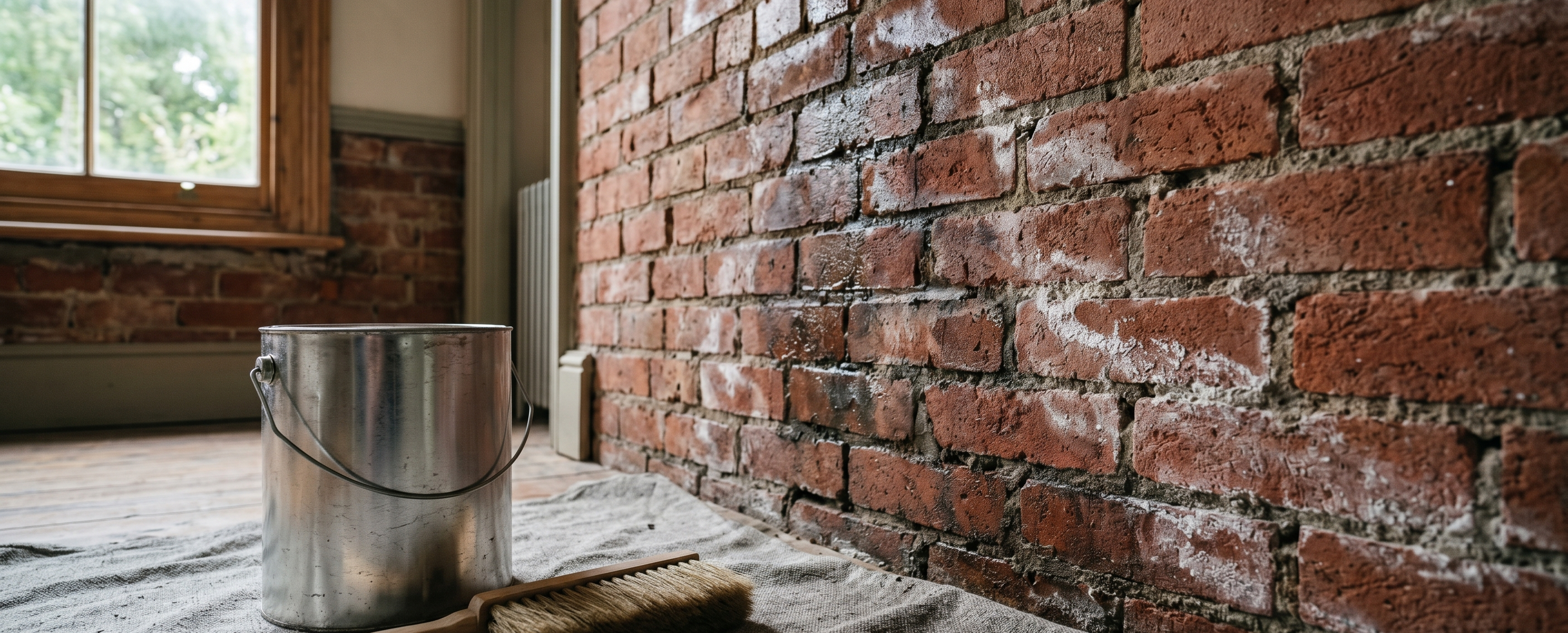
You have a damp patch on your interior wall. Or maybe your exterior brickwork looks permanently wet and mossy. Your instinct is to go to the hardware store, buy a tin of "Heavy Duty Waterproof Sealer" (usually a thick, clear varnish), and seal it up.
If you choose the wrong type of sealer, this is the single worst thing you can do to a property. By sealing a damp wall with a Non-Breathable coating, you are not fixing the problem; you are turning a wet wall into a ticking time bomb.
However, this doesn't mean you shouldn't waterproof your home. It means you must use the right technology. You need to stop the rain from getting in, while still letting the wall "exhale." Here is the physics of why you must never trap moisture, and how SummitSeal - BRICOAT solves the problem safely.
The Issue with Non-Breathable Sealers
Most cheap sealers and standard masonry varnishes are Film-Forming. They create a solid skin over the brick, like wrapping your house in cling film.
-
The Trap: Walls are not solid blocks; they are transit systems. Moisture enters from the ground (rising damp), from the inside (cooking/showering), and from leaks.
-
The Pressure: This moisture naturally tries to evaporate out through the external face of the brick.
-
The Failure: If you block that exit with a plastic sealer, the moisture hits the back of the coating and gets stuck. The wall becomes saturated. It hits 100% humidity inside the brick.
The Consequence
This is where the catastrophe happens. Water expands by roughly 9% when it freezes. If your bricks are dry, this isn't a problem. If your bricks are saturated because you sealed the water inside with a cheap varnish, there is no air space left for that expansion.
When the temperature drops below zero:
-
The trapped water freezes behind the sealer.
-
The ice expands and pushes outwards with immense force.
-
The face of the brick shears off. This is called Spalling. It is irreversible. You cannot stick the brick face back on. By trying to protect the wall with the wrong product, you have structurally damaged it.
The Solution
You need to stop rain entering, but allow damp to escape, this type of product is typically micro-porous. Our version of this product is SummitSeal - BRICOAT.
The Pore Structure Analogy: Think of the microscopic pores in a brick like a tunnel.
-
A Film Sealer: Puts a door over the tunnel. Nothing gets in, but nothing gets out.
-
SummitSeal - BRICOAT: Lines the inside walls of the tunnel with water-repellent resin, but leaves the tunnel open at both ends.
The Result:
-
Rain Repellent: Raindrops are large liquid molecules. The surface tension created by BRICOAT prevents them from entering the tunnel. They bead up and roll off.
-
Breathable: Damp (Water Vapour) is a tiny gas molecule. It can drift effortlessly through the open tunnel and escape into the air.
This is exactly how high-performance hiking jackets work. They keep the rain off your back, but let your sweat escape so you don't get clammy.
4. The Dry Out Phase
Even when using a high-quality breathable impregnator like SummitSeal - BRICOAT, you must respect the physics of the wall. Do not apply anything to a saturated wall. If the wall is soaking wet (dark red/brown), the pores are full of water. Even a breathable impregnator cannot soak in if there is no room for it.
The Protocol:
-
Fix the Source: Fix the leaking gutter, the crack in the render, or the pointing first.
-
Wait: You must allow the wall to dry out naturally. This usually means waiting for a spell of dry weather (48 hours+).
-
Apply: Only when the wall is visually dry should you apply BRICOAT. This ensures the fluid penetrates deep into the masonry for maximum protection.
5. What if I already used the wrong sealer?
If you previously painted your house with a cheap plasticised paint or varnish and it is now bubbling or the bricks are crumbling, you cannot paint over it. You must strip it. You have to remove the non-breathable barrier to let the wall dry out. Once the wall is bare and dry, you can re-protect it correctly with a breathable system.
Conclusion
A house needs to breathe just as much as you do. Trapping damp is exactly how you create dry rot and structural failure. Always look for one word on the label: Breathable. Don't wrap your house in plastic. Let the moisture escape.
-
Avoid "Film-Forming" varnishes.
-
Wait for a dry day.
-
Use Microporous protection.
Need to waterproof without the risk?
Share:
Stopping Penetrating Damp: Clear Water Repellents Explained
Reviving Cast Stone Headers & Sills: Cleaning & Painting Guide