

Made In Great Britain

Direct from our factory

Free Next Day Delivery

On orders over £750

Product Test Results

All test results published

Expert Technical Advice

Call or chat with our team

Seal the Floor First. Paint It Once.

Bare concrete, fresh screed and block paving are porous. Left unprimed, they pull the binder out of the first coat of floor paint, leaving dry patches, uneven sheen and a film that was never properly anchored — the reason coatings lift and delaminate under traffic. Prime AQ goes down first. The dual acrylic system carries into the pores as the water leaves, binding loose surface material and closing the substrate down to an even absorbency. You get a consistent base across the whole floor, a topcoat that grips, and a single coat that is ready to overcoat in four hours.
Click an icon to explore features Tap an icon to explore features

Deep Penetration Hardening

Weak screeds and poor quality concrete release dust because the surface fines are not bound together. The colourless dual acrylic resin soaks into the open pores and hardens within them, binding the loose material into the slab. The result is a dustproofed, strengthened surface with reduced porosity on concrete, brick, blockwork and plaster.

Optimized Curing Profile

Engineered for efficient application cycles. The coating becomes touch-dry in just 2–4 hours (temperature dependent), preventing debris pickup and allowing for a reliable, streamlined application process on large surface areas.

Supplied Ready To Apply

Nothing is mixed and nothing is thinned. Apply one coat by brush, roller or spray straight from the container at 5m² per litre, working between 5°C and 30°C. The carrier is water, so clean tools in warm soapy water and keep VOC content below 30 g/l on site.

Forty Eight Hour Overcoat

The primer is the bond between the slab and the coating that follows, so the topcoat is planned around it. Recoat after 4 hours at 20°C, and apply the finishing coat within 48 hours maximum at 20°C. Prepare the floor correctly before priming; adhesion depends on it.

Performance Profile

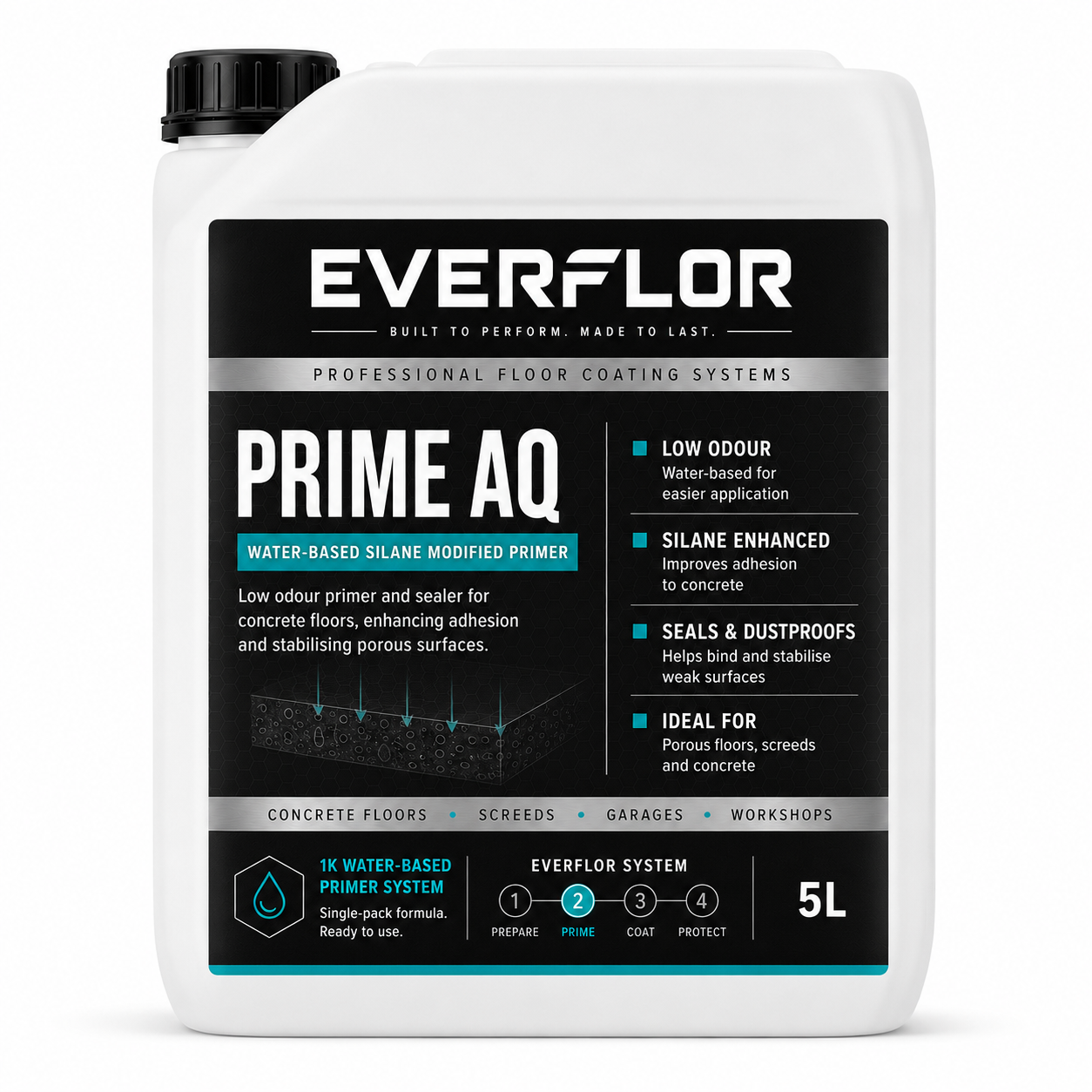
Single-Pack Acrylic Floor Primer. Water based and ready to use from the tin. One coat seals porous concrete, screed and masonry, then accepts a floor coating from four hours at 20°C. Foot traffic in the same four hours keeps site downtime short.

Download Data Sheet
Coverage 5m²per litre, per coat
Touch Dry 2 hoursat 20°C
Coats 1Recommended
Finish Clear Satin

Essential Information

Product Details

Description

EverFlor Prime AQ is a single-pack, water-based acrylic floor primer with a clear satin finish. It is designed to be applied to porous floors before a floor coating is laid down. The primer penetrates the surface, binds loose material and reduces the absorbency of the substrate.

The dual acrylic system carries into the pores of the substrate as the water leaves the film. What remains is a sealed, keyed surface. Bare concrete and fresh screeds draw heavily on a topcoat when left unprimed; the result is patchy sheen, uneven coverage and a film that has never properly bonded. Priming first removes that variable.

One coat is normally enough. The primer is touch dry in 2 hours at 20°C, takes foot traffic after 4 hours, and can be overcoated from 4 hours. Overcoat within 48 hours at 20°C. Apply by brush, roller or spray, straight from the tin — no thinning is required.

Recommended areas of use

  • Bare, porous concrete floors
  • Sand and cement screeds
  • Brick and blockwork
  • Plaster
  • Block paving
  • Interior and exterior floors

Features

  • Water based, so tools wash out in warm soapy water and there is no solvent odour to clear from the building
  • VOC content below 30 g/l, suitable for work in occupied and enclosed interiors
  • Penetrates porous substrates and binds the surface, giving the topcoat a consistent base to adhere to
  • Seals absorbency, so the finish coat is not drawn unevenly into the floor
  • Applies as supplied — no mixing, no thinner, single pack
  • Overcoatable from 4 hours at 20°C, so priming and painting can be done across a single working period
  • Foot traffic after 4 hours at 20°C, limiting downtime on working floors
  • Clear satin, so it does not alter the colour of the substrate beneath
  • 24 month shelf life in sealed containers

Good to know

Adhesion depends on preparation. Floors must be clean, sound, dry and free of dust, grease, laitance and flaking material before the primer goes down. Power floated and self-levelled floors have a closed surface and should be mechanically abraded or acid etched first, otherwise the primer has nothing to key into.

Apply between 5°C and 30°C. On exterior work, check that no rain is forecast and the floor is dry through. Overcoat inside 48 hours at 20°C; beyond that window the primed surface should be keyed before the topcoat is applied.

Application

SURFACE PREPARATION

Floors must be prepared correctly to ensure good adhesion — this is the main limitation of the product and the usual cause of failure.

Make sure the surface is sound, clean and dry. Remove all dust, dirt, grease, oil, laitance and flaking coatings. Power floated and self-levelled concrete has a closed surface; grind it or acid etch it so the primer has something to penetrate.

CONDITIONS

Apply between 5°C and 30°C. Do not apply below 5°C. Check the floor is free from dampness and condensation before you start. On exterior work, make sure no rain is forecast for the drying period.

APPLICATION

Stir the tin before use. Apply as supplied — the primer needs no thinning and no mixing with a second component.

Apply one coat by brush, roller or spray. Keep the coat thin and even. Roll out any pooling, particularly on block paving and in joints, where excess material can gather.

DRYING AND OVERCOATING

Touch dry in 2 hours at 20°C. Take foot traffic after 4 hours at 20°C. Apply the topcoat from 4 hours, and within 48 hours at 20°C. Lower temperatures extend these times.

Clean brushes, rollers and spray equipment with warm soapy water immediately after use. Reseal the tin and store between 5°C and 30°C, away from frost. Shelf life is 24 months in a sealed container.

Technical Data
Finish Clear Satin
Coverage 5m² per litres
Recommended coats 1
Touch dry 2 Hours at 20℃
Recoat after 4 Hours at 20℃
Application Brush, Roller or Spray
Cleaner / Thinner Not required — apply as supplied
Suitable substrates Porous, bare concrete, sand and cement screeds, brick, blockwork, plaster and block paving
Shelf life 24 months
VOC content < 30 g/l
Cleaning tools Warm soapy water
Number of components 1
Minimum application temperature 5℃
Maximum overcoat 48 hours maximum at 20°C
Principal limitations Floors must be prepared correctly to ensure good adhesion.
Foot traffic 4 Hours at 20℃
Composition Single pack, dual acrylic system. Water based.
Files & Data Sheets

The Knowledge Hub

Everything You Need to Know

Browse our collection of in-depth articles and how-to guides designed to help you get the most out of this product. whether you need help with surface preparation or application advice, we have you covered.

View Technical Hub

A visual comparison of a mossy, weed-infested block paving driveway next to a freshly cleaned section in the UK.
  • scritto da Sam Marriott

Restoring Block Paving: Removing Moss, Weeds, and Lichen
Block paving is the most popular driveway choice in the UK, but it has a major design flaw: Joints. Those thousands of gaps between the bricks are the perfect nursery for weeds, moss, and the dreaded "black spot" lichen. Every...

Continua a leggere

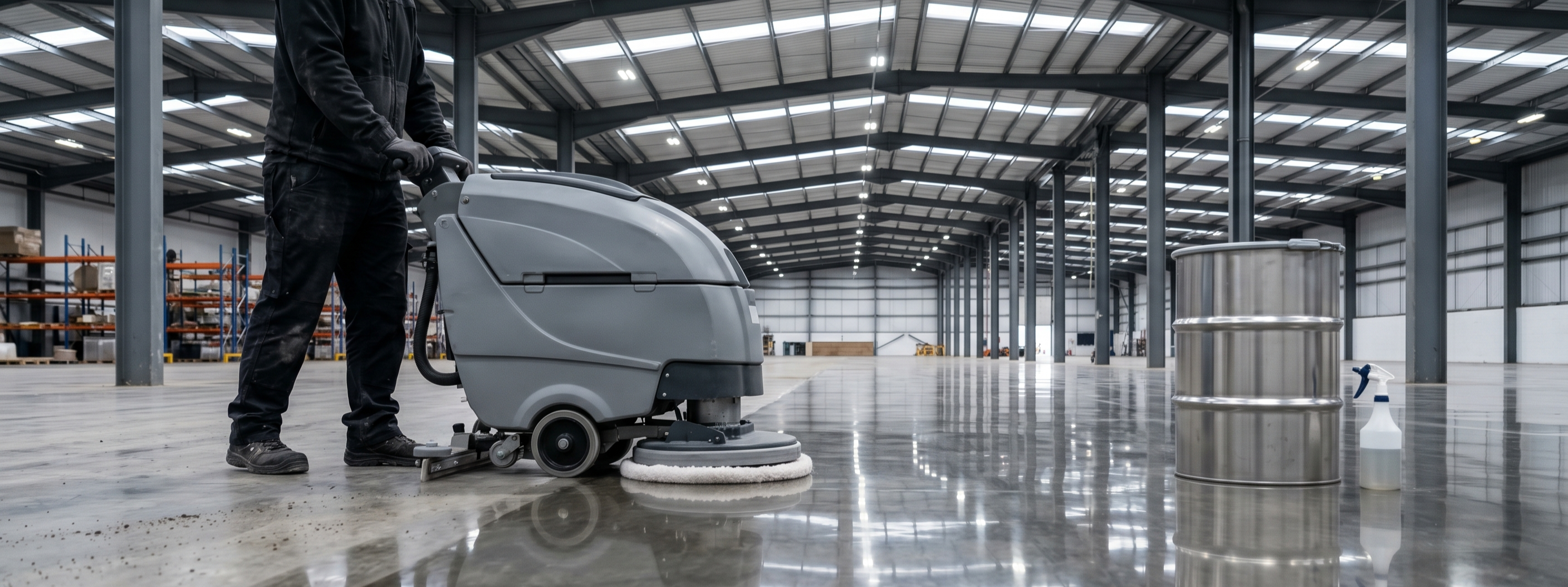
An unbranded industrial floor scrubber being used to maintain the high-gloss shine on a polished concrete warehouse floor.
  • scritto da Sam Marriott

Deep Cleaning Polished Concrete Without Damaging the Shine

Polished concrete is often sold as the "maintenance-free" flooring option. That is a lie. Yes, it is incredibly durable. It won't peel or flake like paint. But if you ignore it, or worse - if you clean it with the...

Continua a leggere

Two unbranded silver tins labeled Acid and Alkaline on an industrial concrete warehouse floor.
  • scritto da Sam Marriott

Acid vs. Alkaline Concrete Cleaners: Which is Best for Your Floor?

If you walk into a hardware store and ask for "concrete cleaner," you'll probably end up with a few different options in-front of you. Most people grab the bottle with the most aggressive warning label, thinking "stronger is better." But...

Continua a leggere

How to Sand a Painted Concrete Floor for Recoating
  • scritto da Sam Marriott

How to Sand a Painted Concrete Floor for Recoating

In our Sanding vs. Grinding: Preparing Previously Painted Concrete guide, we established that if your floor passes the Cross-Hatch Adhesion Test, then the next step for recoating will be sanding. Choosing to sand rather than grind saves you hundreds of pounds in equipment rental and diamond consumables....

Continua a leggere

FAQs

Please read our FAQs page to find out more.

How many coats do I need?
One coat is the recommended application. Apply it thin and even at around 5m² per litre, rolling out any pooling. On very porous floors the primer will be absorbed quickly, so watch coverage and keep the film consistent rather than flooding the surface.
When can I apply the floor paint over it?
Overcoat from 4 hours at 20°C. The maximum overcoat window is 48 hours at 20°C. If the primed floor is left longer than that before painting, key the surface before applying the topcoat. Lower temperatures lengthen both the drying and the overcoat times.
Can I use it outside?
Yes. Prime AQ is suitable for interior and exterior floors, including block paving, brick and blockwork. Apply between 5°C and 30°C, make sure the surface is dry through, and check that no rain is forecast during the drying period.
Does it need thinning or mixing?
No. It is a single-pack, water-based product supplied ready to use. Stir it before application and apply as supplied by brush, roller or spray. Clean tools with warm soapy water.
Will it work on a power floated concrete floor?
Only after mechanical preparation. Power floated and self-levelled floors have a closed, dense surface with little porosity for the primer to penetrate. Grind or acid etch the floor first to open it up. Floors must be prepared correctly for good adhesion.

Didn’t find your answer?

Don't hestitate to contact us