
Made In Great Britain

Direct from our factory

Free Next Day Delivery

On orders over £750

Product Test Results

All product test results published

Expert Technical Advice

Call or chat with our team

4.9
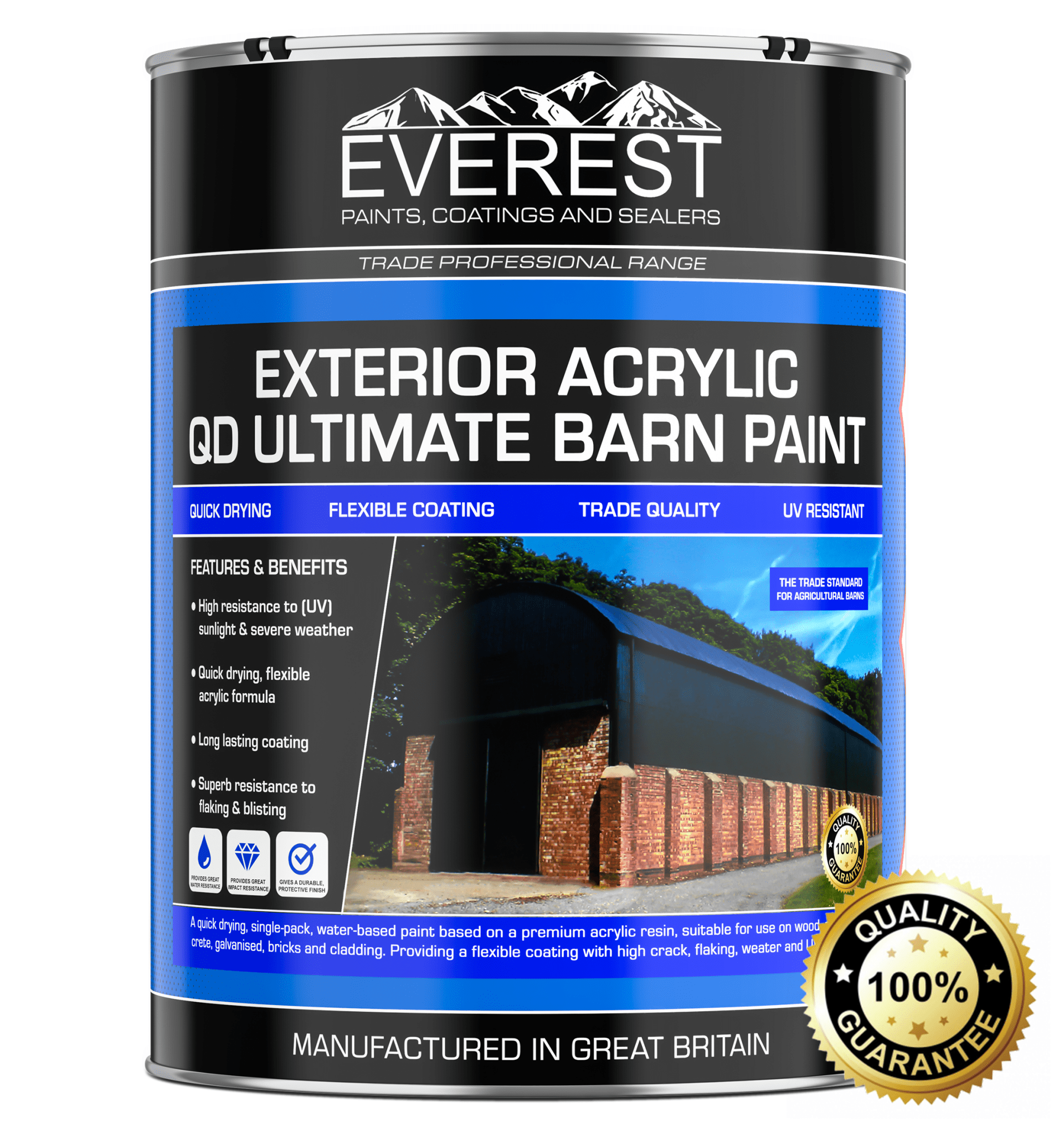
Everest - Acrylic Barn Paint - Everest Paints
  • Midnight Black
  • Anthracite Grey
  • Slate Grey (Dark Grey)
  • Harbour Grey
  • Pebble Grey (Light Grey)
Featured
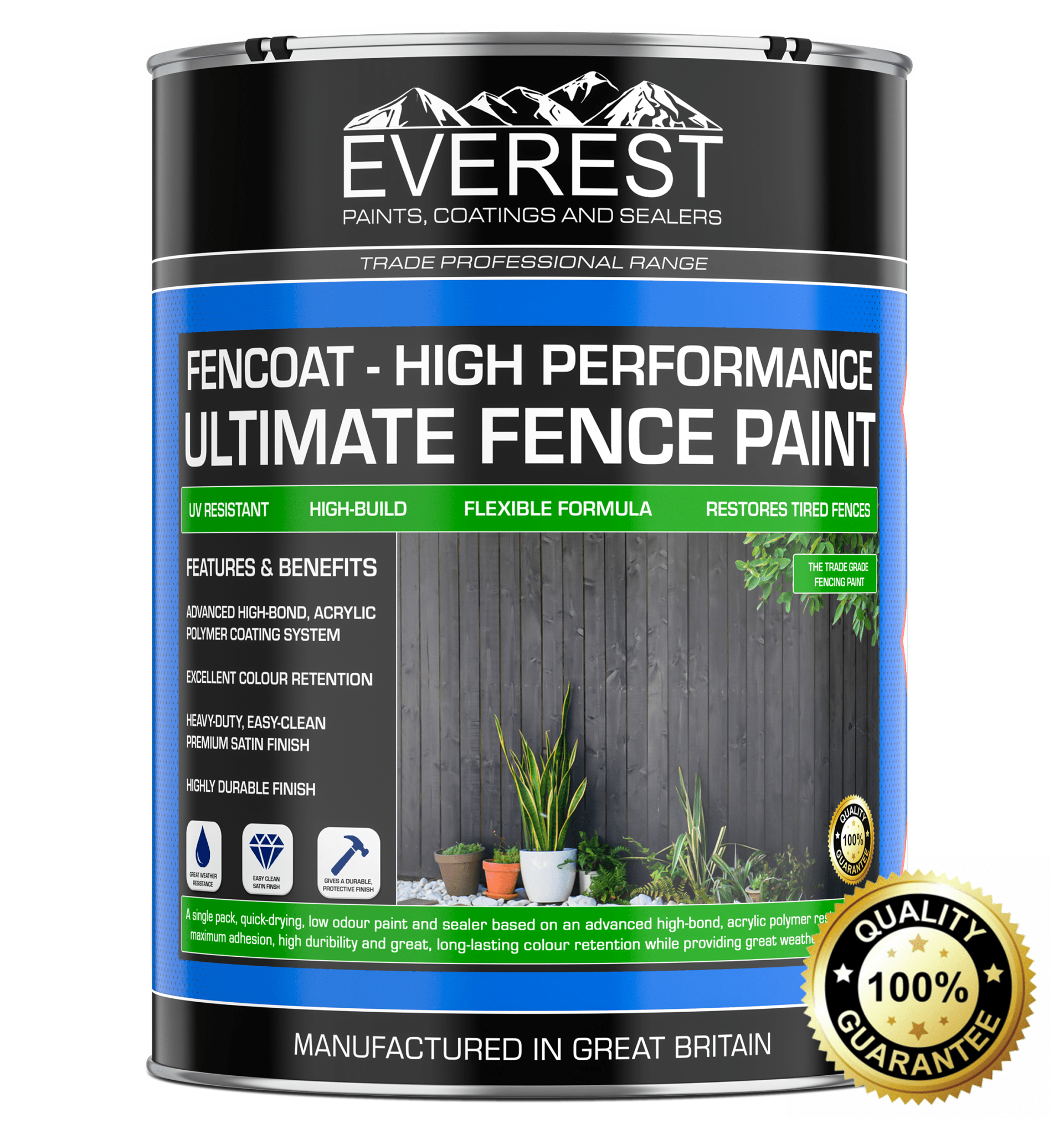
Everest - FENCOAT - Ultimate Fence Paint - Everest Paints
  • Midnight Black
  • Anthracite Grey
  • Slate Grey (Dark Grey)
  • Harbour Grey
  • Pebble Grey (Light Grey)
Featured
Everest - MODCOAT - HB Modular Building Coating - Everest Paints
  • Jet Black (RAL 9005)
  • Anthracite Grey (RAL 7016)
  • Slate Grey (RAL 7015)
  • Traffic Grey A (RAL 7042)
  • Agate Grey (RAL 7038)
Featured
Everest - STACOAT - Ultimate Stables Paint - Everest Paints
  • Midnight Black
  • Anthracite Grey
  • Slate Grey (Dark Grey)
  • Harbour Grey
  • Pebble Grey (Light Grey)

Fence and Shed Paints for Exterior Wood

Duty classification:
Light to Medium Duty
Suitable substrates:
Timber fencing Wooden sheds

System Overview

For timber fencing and wooden sheds exposed to year-round weathering, protective coatings must provide UV resistance, moisture control and flexibility to accommodate timber movement. Fence and shed paints for exterior wood are specified to refresh appearance while protecting garden structures from surface degradation.

This collection is based on water-based acrylic technology formulated for external timber. These systems provide a breathable, flexible coating film that expands and contracts with seasonal timber movement, reducing the risk of cracking and premature flaking.

Designed for brush or spray application, these paints support efficient coverage of large fence runs and shed panels, making them suitable for refurbishment of previously coated exterior wood subject to correct preparation.

Suitable Substrates & Surface Preparation

Timber fencing must be clean, dry and free from surface contamination before coating. Dirt, algae and loose fibres should be removed, and any degraded or soft timber areas addressed prior to painting.

New timber should be allowed to weather where necessary to reduce surface moisture and remove treatment residues. Pressure treated timber in particular may require a period of exposure before coating to ensure adequate adhesion.

Previously coated sheds and fences should be assessed for adhesion. Sound coatings can generally be overcoated following cleaning and light abrasion. Flaking or peeling paint must be removed to provide a stable substrate.

Moisture content is critical. Coating should not proceed on damp timber or where rainfall is expected before the film has formed. Good airflow around fencing and shed panels will assist drying and long-term performance.

Performance Characteristics & Limitations

Water-based acrylic fence and shed paints provide UV resistant colour protection and weather resistant finishes suitable for light to medium duty exterior exposure. Their breathable formulation allows limited moisture vapour transmission, helping reduce blistering risk where minor residual moisture exists within the timber.

The flexible coating film accommodates natural timber expansion and contraction caused by changes in temperature and humidity. This flexibility is essential for maintaining adhesion on thin fence boards and panel joints.

Abrasion resistance is limited, and these coatings are not designed for decking or surfaces subject to regular foot traffic. They are also not intended as structural wood preservatives; where decay risk is present, appropriate timber treatment should be applied before painting.

These systems are not suitable for constant standing water, immersion or poorly detailed timber structures where water is trapped against the surface.

Internal vs External Considerations

This collection is intended exclusively for external use. Exposure to UV radiation, rainfall and temperature fluctuation are primary performance factors.

Application should take place under suitable weather conditions, avoiding cold, damp or excessively hot surfaces that may affect film formation. Adequate drying time between coats should be observed to ensure uniform colour and durability.

Although primarily decorative in function, these coatings contribute to moisture management by reducing direct water penetration into exposed timber.

Selection Guidance & When to Specify Alternatives

Fence and shed paints within this collection are appropriate for domestic garden fencing, sheds and light timber outbuildings requiring colour refresh and surface protection.

For higher exposure locations, longer maintenance cycles or increased durability requirements, upgrading to more robust exterior wood protection systems should be considered.

Where a more natural timber appearance is preferred, wood stains or penetrating treatments may provide an alternative to opaque film-forming paints.

System selection should be based on timber condition, exposure level and maintenance expectations, with preparation forming the foundation of reliable long-term performance.

Explore Wood Paint & Stain Systems

Fences & Shed Paints FAQs

View All FAQ's

Technical Guidance & Application Advice

Timber fencing and sheds are subject to UV exposure, rainfall and seasonal movement, all of which influence coating performance. Surfaces must be clean, dry and free from biological growth or unstable previous coatings before application. Water-based acrylic systems rely on sound timber and correct film thickness to provide breathable, flexible protection in external domestic environments.

What preparation is required before applying fence and shed paints for exterior wood?

Timber should be clean, dry and free from dirt, algae and loose fibres. Weathered surfaces may require cleaning with a suitable exterior wood cleaner followed by light abrasion to remove degraded material. Any peeling or flaking coatings must be removed to a firm edge. Moisture content should be sufficiently low before painting, as coating damp timber can reduce adhesion and durability.

Can these paints be applied over previously painted fences and sheds?

Yes, provided the existing coating is sound and well adhered. All loose or failing material should be removed, and glossy surfaces lightly abraded to promote intercoat adhesion. Compatibility with unknown previous coatings should be checked in a small test area. Where existing paint is extensively degraded, full removal may be necessary before reapplication to ensure consistent performance.

Are these systems suitable for pressure treated timber?

Pressure treated timber should be allowed to weather and dry before coating. Newly treated wood may contain residual moisture or preservative residues that can interfere with adhesion. Adequate drying time and light surface abrasion improve coating performance. Applying directly onto freshly treated or damp timber increases the risk of blistering or premature breakdown.

How does the acrylic formulation accommodate timber movement?

Water-based acrylic coatings form a flexible film that can expand and contract with normal seasonal movement in timber. This helps reduce cracking and flaking compared to more rigid finishes. However, excessive movement due to poor fixing, splitting boards or persistent moisture ingress can still lead to coating failure. Structural integrity and good detailing are important for long-term performance.

Are these paints suitable for high wear surfaces such as decking?

No. These systems are intended for vertical or low-wear timber surfaces such as fences and sheds. They are not formulated to withstand foot traffic or abrasion associated with decking. For horizontal surfaces subject to regular use, a dedicated decking system with enhanced wear resistance should be specified.

Will the coating protect against rot or insect attack?

These paints provide surface protection against weathering but are not substitutes for structural wood preservatives. Where timber is at risk of rot or insect infestation, appropriate preservative treatment should be applied prior to painting. Coatings should only be applied once treated timber is dry and stable.

Didn’t find your answer?

Don't hestitate to contact us

Expert Advice & Guides

A few of our most recent guides applicable to this product range.

View Technical Hub

This section doesn’t currently include any content. Add content to this section using the sidebar.