System Overview
For concrete floors and previously painted floor surfaces in cold environments, low temperature floor coatings are designed to cure and perform where conventional coatings struggle to form a reliable film. These systems allow floor protection to be applied in unheated buildings, refrigerated spaces, and temperature-controlled facilities where standard coatings may cure slowly or fail to harden correctly.
Industrial environments such as cold storage areas, refrigerated warehouses, and unheated workshops often operate at temperatures that prevent many traditional coatings from curing effectively. Low temperature floor paints use specialised resin technologies that remain reactive at reduced temperatures, allowing reliable curing and adhesion to prepared concrete substrates.
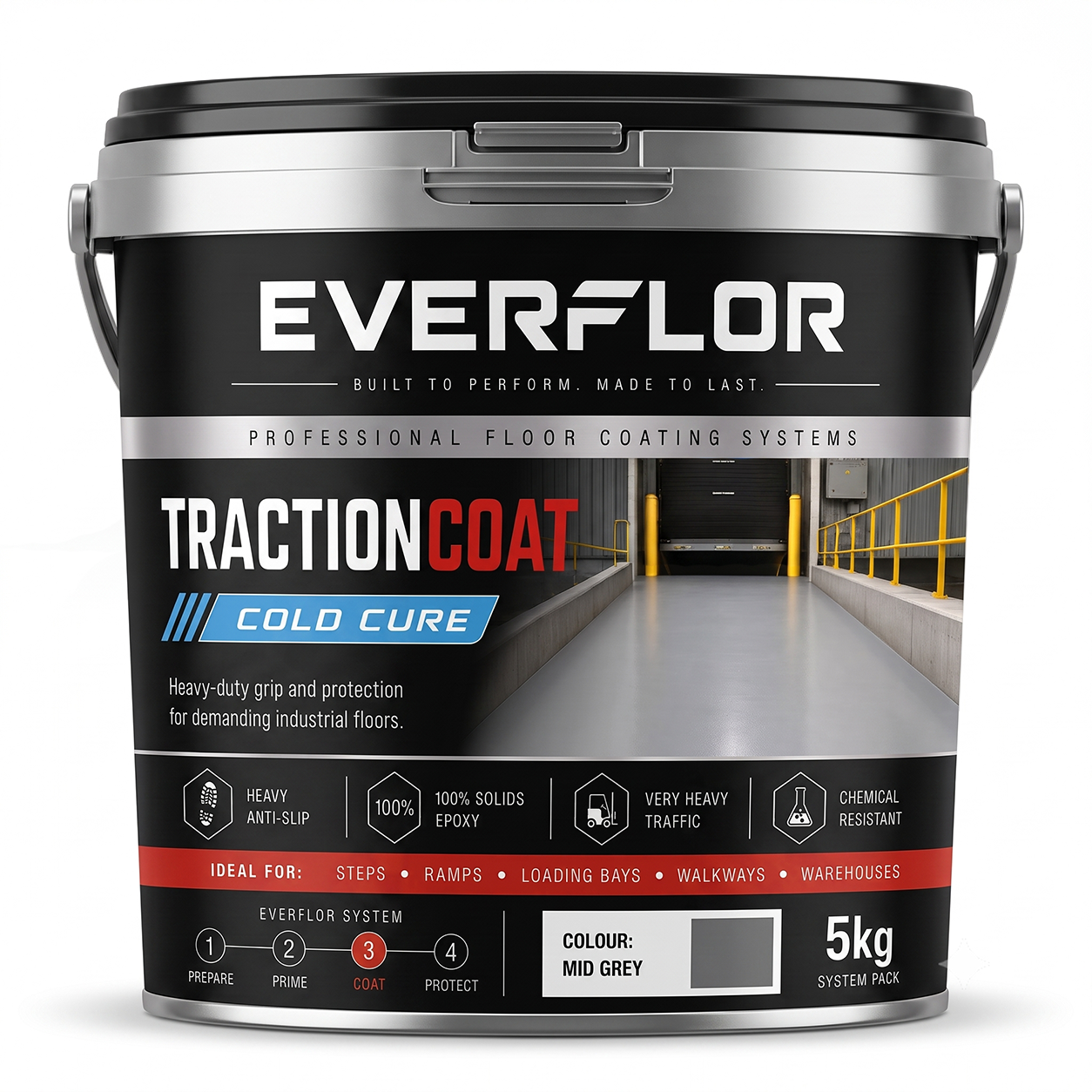
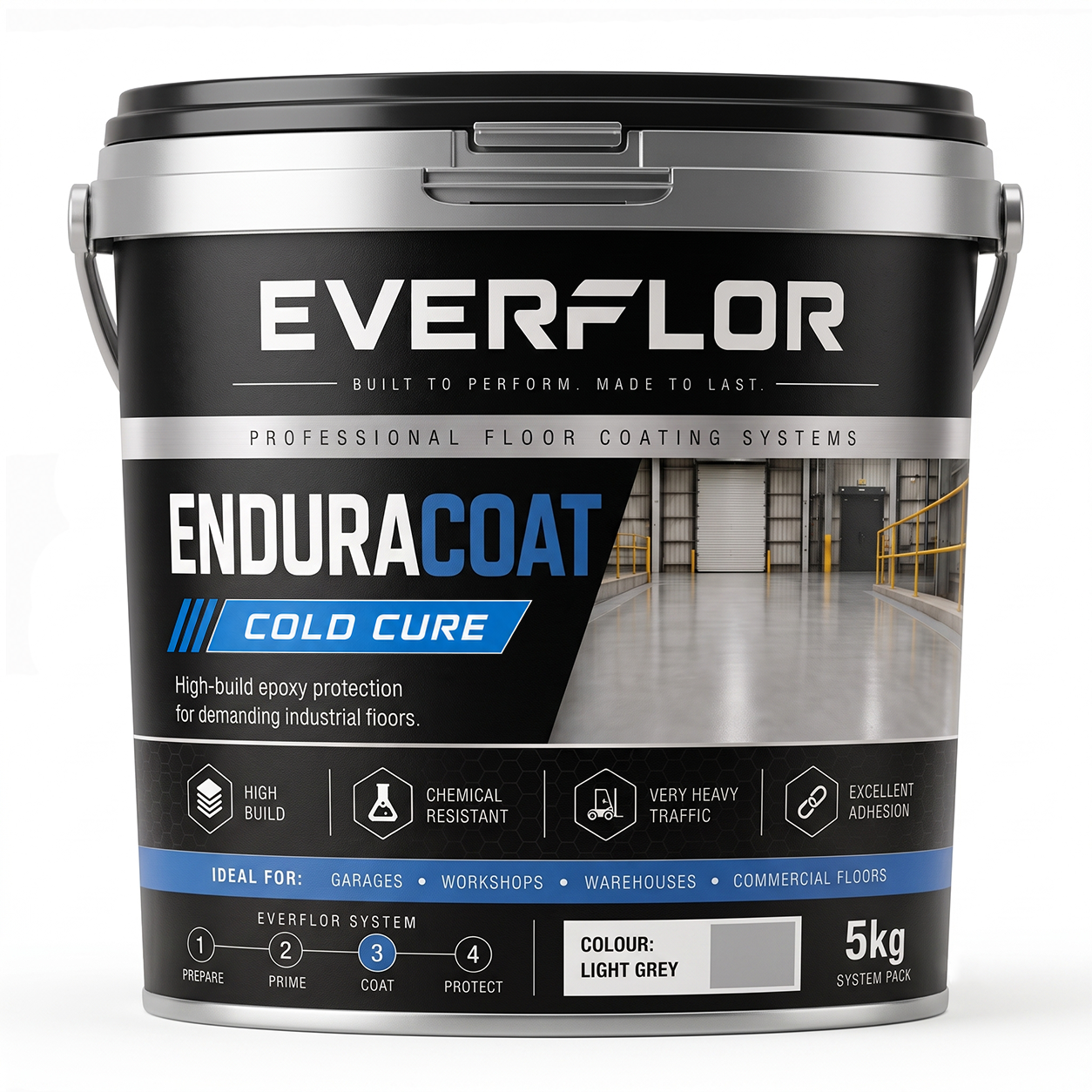
EVEREST Everflor low temperature floor coatings utilise polyaspartic and solvent-free epoxy technologies to provide durable floor protection in cold service conditions. Polyaspartic systems are particularly suited to low temperature application due to their rapid curing behaviour, while certain epoxy formulations are engineered to cure at reduced ambient temperatures while maintaining strong adhesion to prepared substrates.
These coatings allow maintenance or refurbishment work to proceed without requiring full heating of large industrial spaces.
Suitable Substrates & Surface Preparation
Concrete floors are the primary substrate for low temperature floor coatings. As with other resin floor systems, surface preparation remains essential for reliable adhesion and long-term durability.
Concrete surfaces should be clean, dry, and free from grease, oils, dust, and curing compounds before coating application. Mechanical preparation such as grinding or shot blasting is often recommended to remove weak surface layers and provide a suitable profile for coating adhesion.
Cold environments can sometimes increase the likelihood of condensation on concrete surfaces. Floors must be dry before coating application because surface moisture can interfere with adhesion and curing.
Previously painted floors may be recoated where the existing coating remains well adhered. Loose or deteriorated coatings should be removed and the surface lightly abraded to improve intercoat bonding.
Where concrete surfaces are porous or prone to dusting, compatible primer systems may be used to regulate absorption and stabilise the substrate prior to applying the main coating system.
Performance Characteristics & Limitations
Low temperature floor coatings are formulated to maintain curing activity at reduced ambient temperatures, allowing floor protection to be installed in environments where conventional coatings may remain soft or uncured.
Polyaspartic coatings provide rapid curing characteristics and can achieve early hardness even in cold environments. This can be beneficial where operational downtime must be minimised and floors need to return to service quickly.
Low temperature epoxy systems provide strong adhesion and good resistance to mechanical wear once fully cured. These coatings can offer durable protection for industrial floors exposed to pedestrian traffic, wheeled equipment, and routine operational use.
Both technologies can provide abrasion resistance and surface durability suitable for medium to heavy duty service environments.
However, these coatings are not designed primarily for exterior exposure unless the formulation specifically provides UV and weather resistance. Their performance also depends heavily on correct substrate preparation and maintaining suitable environmental conditions during application.
Internal vs External Considerations
Low temperature floor coatings are primarily designed for interior environments where ambient temperatures are controlled but remain below the curing range of standard floor coatings.
Typical internal environments include cold storage facilities, refrigerated warehouses, unheated industrial buildings, and plant rooms where temperatures remain consistently low. In these spaces, coatings must cure reliably despite reduced thermal energy within the environment.
External environments introduce additional variables such as UV exposure, rainfall, and freeze-thaw cycles. Because low temperature coatings in this category are not formulated specifically for outdoor weathering, exterior use may require alternative systems designed for both temperature tolerance and environmental exposure.
Temperature conditions during application remain a critical factor in system performance, even with specialised low temperature formulations.
Selection Guidance & When to Specify Alternatives
Low temperature floor coatings are specified where floor refurbishment or installation must take place in cold environments that cannot be easily heated. These systems allow protective coatings to be applied without delaying projects until warmer conditions are available.
They are commonly used in refrigerated warehouses, cold storage areas, unheated workshops, and service corridors where reliable curing at reduced temperatures is required.
However, where floors require extremely high abrasion resistance, heavy chemical resistance, or rapid operational turnaround, more specialised resin flooring systems may be appropriate. High-build polyaspartic flooring systems or advanced industrial epoxy coatings can provide increased durability and extended service life in demanding environments.
System selection should therefore consider both the environmental temperature and the mechanical demands placed on the floor to ensure the coating performs reliably over time.