System Overview
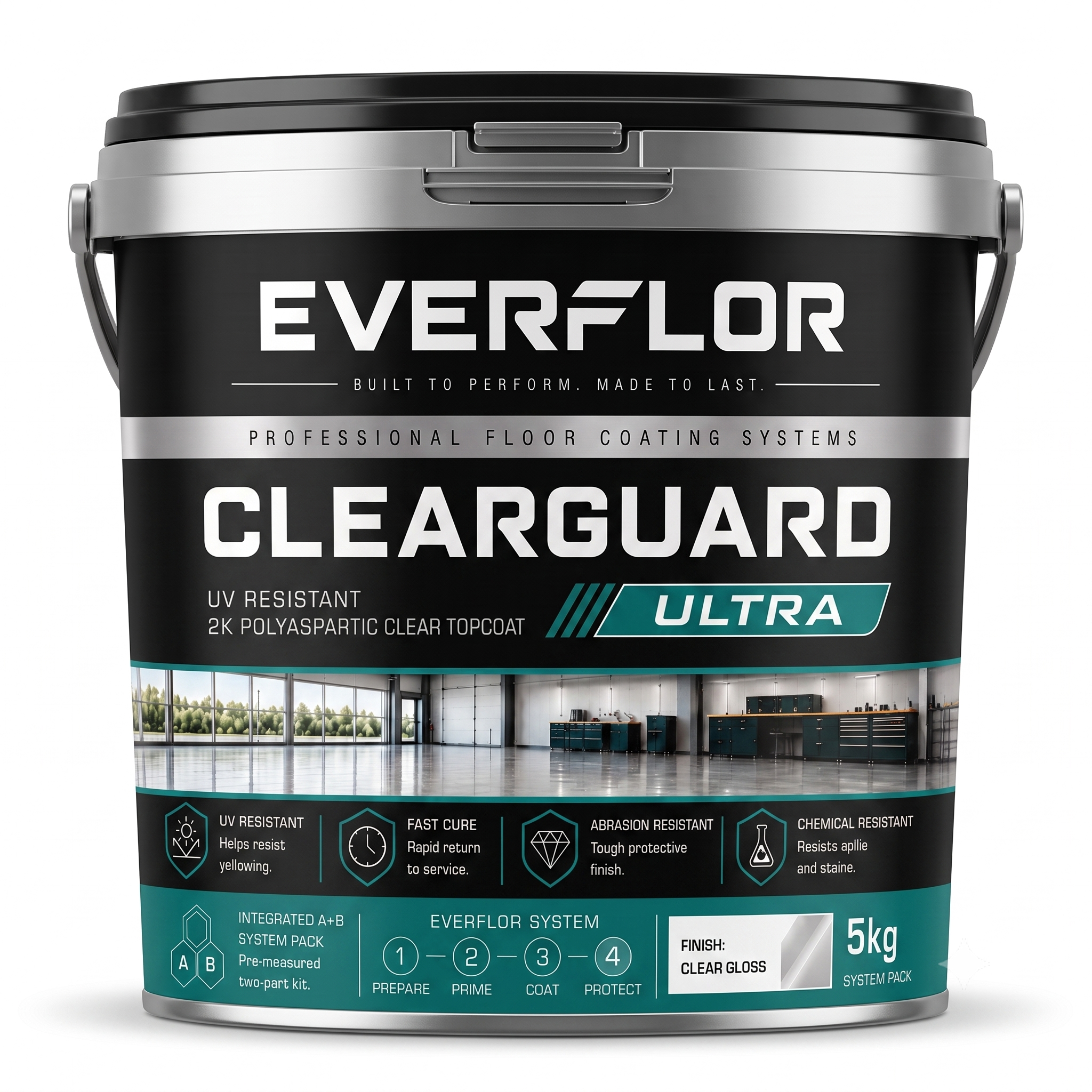
For concrete floors and previously painted floor surfaces, polyaspartic coatings provide rapid-curing floor protection designed for environments where downtime must be minimised. These systems form a durable resin-based floor coating that bonds to prepared concrete substrates while allowing fast return to service compared with conventional flooring technologies.
In operational environments such as warehouses, workshops, garages, and production areas, extended curing times can disrupt normal activity. Polyaspartic technology allows coating systems to cure more rapidly than many epoxy or polyurethane systems, making them suitable for maintenance or refurbishment work where operational continuity is important.
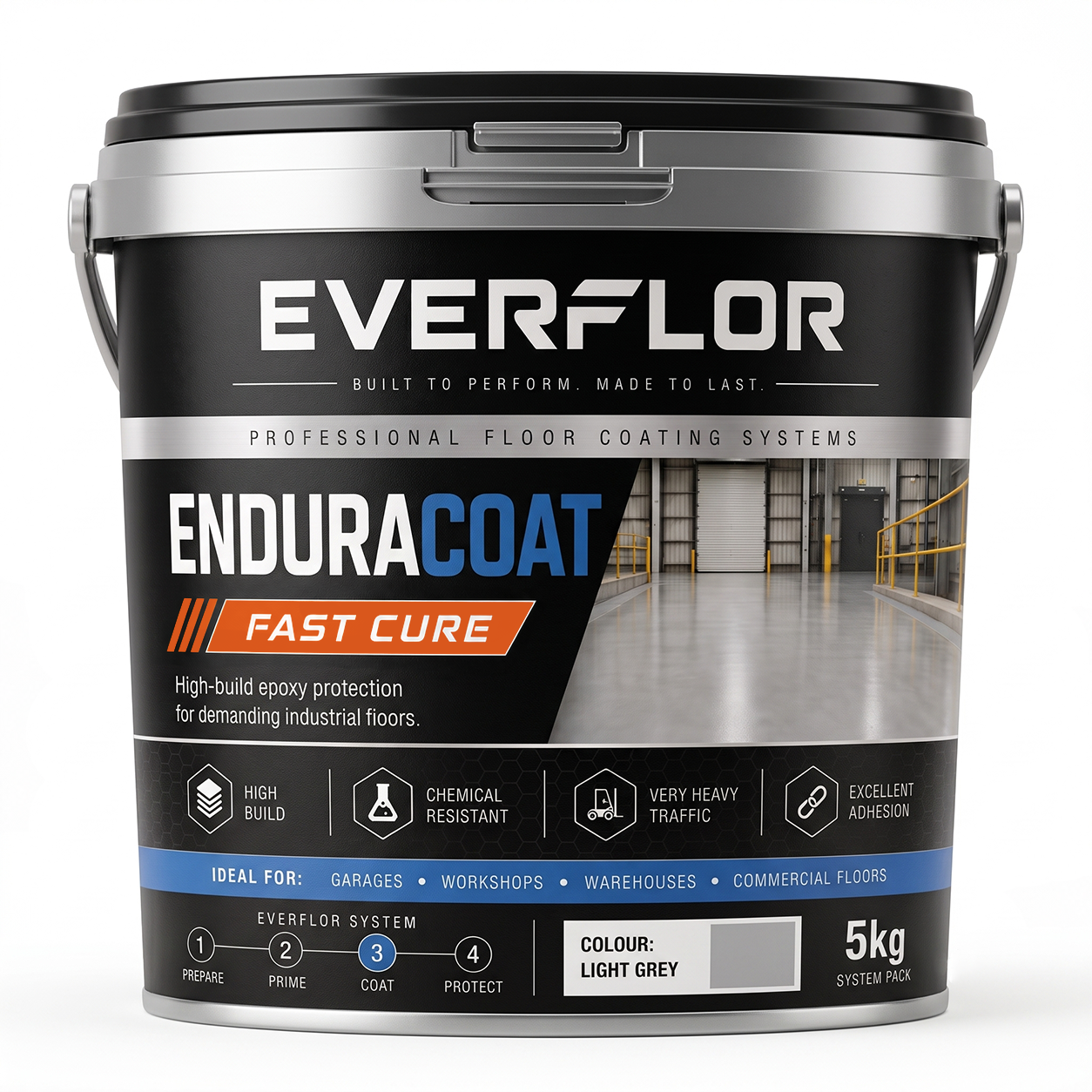
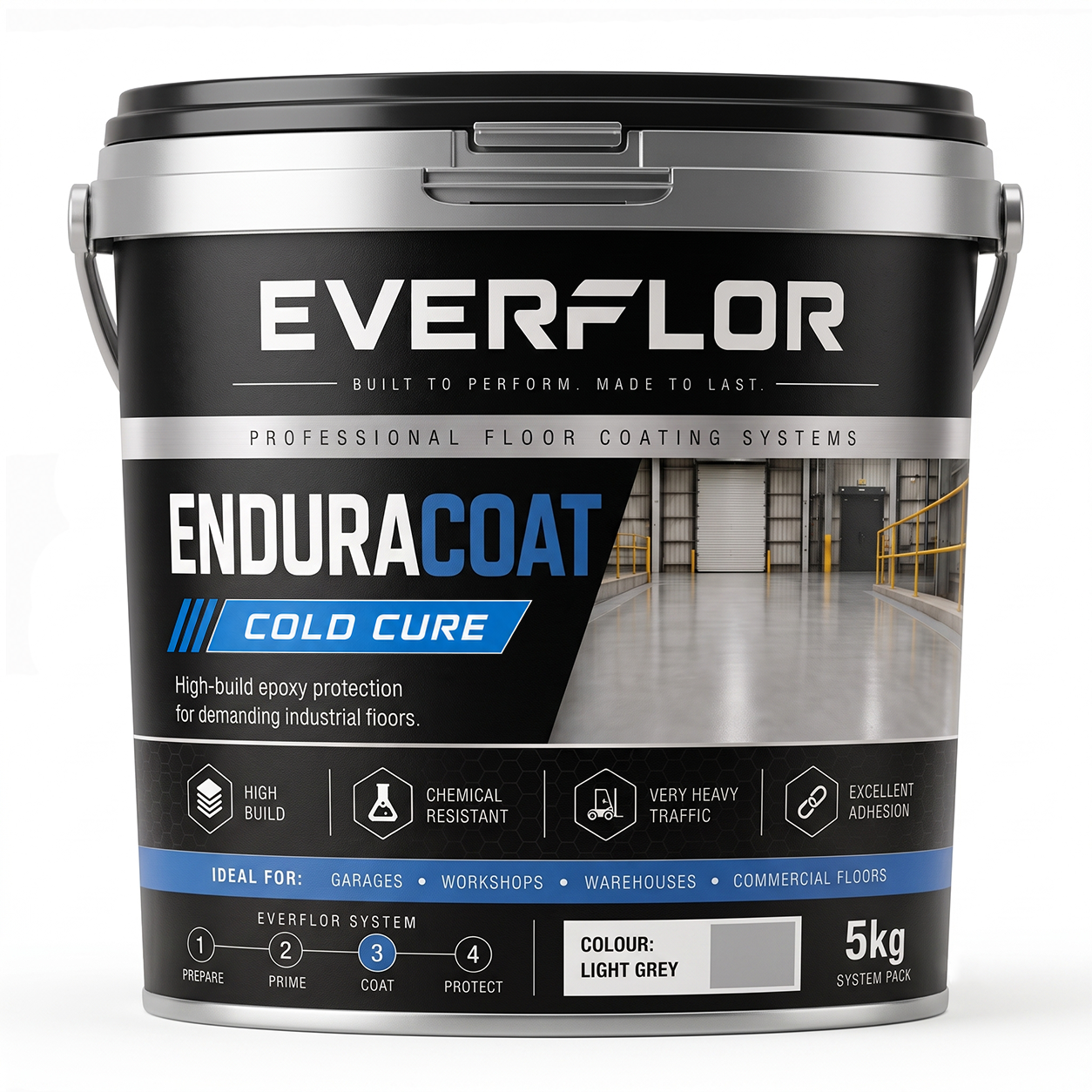
EVEREST Everflor polyaspartic floor coatings are designed to provide abrasion resistance, chemical durability, and strong adhesion to prepared mineral substrates. These coatings can be applied as part of a protective floor system that withstands mechanical wear from pedestrian traffic, wheeled equipment, and light vehicle movement.
Because of their rapid curing behaviour, polyaspartic coatings are commonly specified where flooring work must be completed within restricted installation windows.
Suitable Substrates & Surface Preparation
Concrete floors are the primary substrate for polyaspartic floor coatings. As with most resin-based floor systems, surface preparation is critical to ensure reliable adhesion and long-term durability.
Concrete substrates should be clean, dry, and free from grease, oil contamination, curing compounds, and dust prior to coating. Mechanical preparation methods such as grinding or shot blasting are commonly used to remove weak surface layers and create a suitable profile for resin adhesion.
Where concrete surfaces are porous or prone to dusting, a compatible primer system may be used to stabilise the substrate before applying the polyaspartic coating.
Previously painted floors may be recoated where the existing coating remains well bonded to the substrate. Loose or deteriorated coatings should be removed and the surface lightly abraded to improve intercoat adhesion.
Moisture within the concrete substrate should also be considered during preparation, as excessive moisture can interfere with resin curing and bonding.
Performance Characteristics & Limitations
Polyaspartic floor coatings are valued primarily for their rapid curing performance. These systems can achieve usable hardness within a shorter time frame than many conventional resin coatings, allowing faster project completion and reduced disruption to facility operations.
Once cured, polyaspartic coatings provide a durable surface capable of resisting abrasion from pedestrian traffic, wheeled equipment, and routine operational activity. The cured film also offers resistance to oils, fuels, and common industrial contaminants.
Polyaspartic coatings can maintain good adhesion to properly prepared concrete substrates while delivering consistent film formation even under relatively low ambient temperatures.
However, polyaspartic coatings require careful mixing and controlled application due to their relatively short working time compared with slower-curing resin systems. Rapid cure behaviour means that installers must work efficiently to maintain consistent film thickness.
In environments exposed to extremely heavy mechanical wear or aggressive chemical exposure, higher-build resin flooring systems may still be required to achieve maximum durability.
Internal vs External Considerations
Polyaspartic floor coatings can be used in both internal and external environments when correctly specified. Their curing characteristics allow installation in conditions where other resin coatings may require longer curing periods.
Internal environments such as warehouses, workshops, garages, and service corridors benefit from the rapid return-to-service capability of polyaspartic coatings. These environments often require durable floor finishes that minimise operational downtime.
External applications such as loading areas or sheltered exterior floors may also benefit from polyaspartic technology where weather exposure and operational use coincide. Certain polyaspartic systems can provide good UV stability compared with some traditional resin coatings.
Environmental conditions during installation remain important because rapid curing behaviour is influenced by ambient temperature and humidity.
Selection Guidance & When to Specify Alternatives
Polyaspartic floor coatings are typically specified where rapid installation and return to service are critical factors. They are particularly useful in operational environments where flooring work must be completed quickly to minimise disruption.
These coatings are commonly used in warehouses, production facilities, workshops, garages, and plant areas where durable floor protection is required alongside fast curing performance.
However, where floors are exposed to extremely heavy industrial traffic, aggressive chemicals, or extended service demands, higher-build resin flooring systems may provide improved long-term durability. Specialist polyaspartic flooring systems with increased film thickness can also be specified for environments requiring enhanced abrasion resistance.
Selecting the correct system should consider traffic intensity, substrate condition, and operational downtime requirements to ensure the floor coating provides the appropriate balance between installation speed and long-term performance.