System Overview
For concrete, asphalt, and previously painted floors, single pack floor coatings provide a practical maintenance solution where straightforward application and moderate durability are required. These coatings are supplied as one-component systems that cure through air drying or moisture reaction, eliminating the need for mixing multiple components before application.
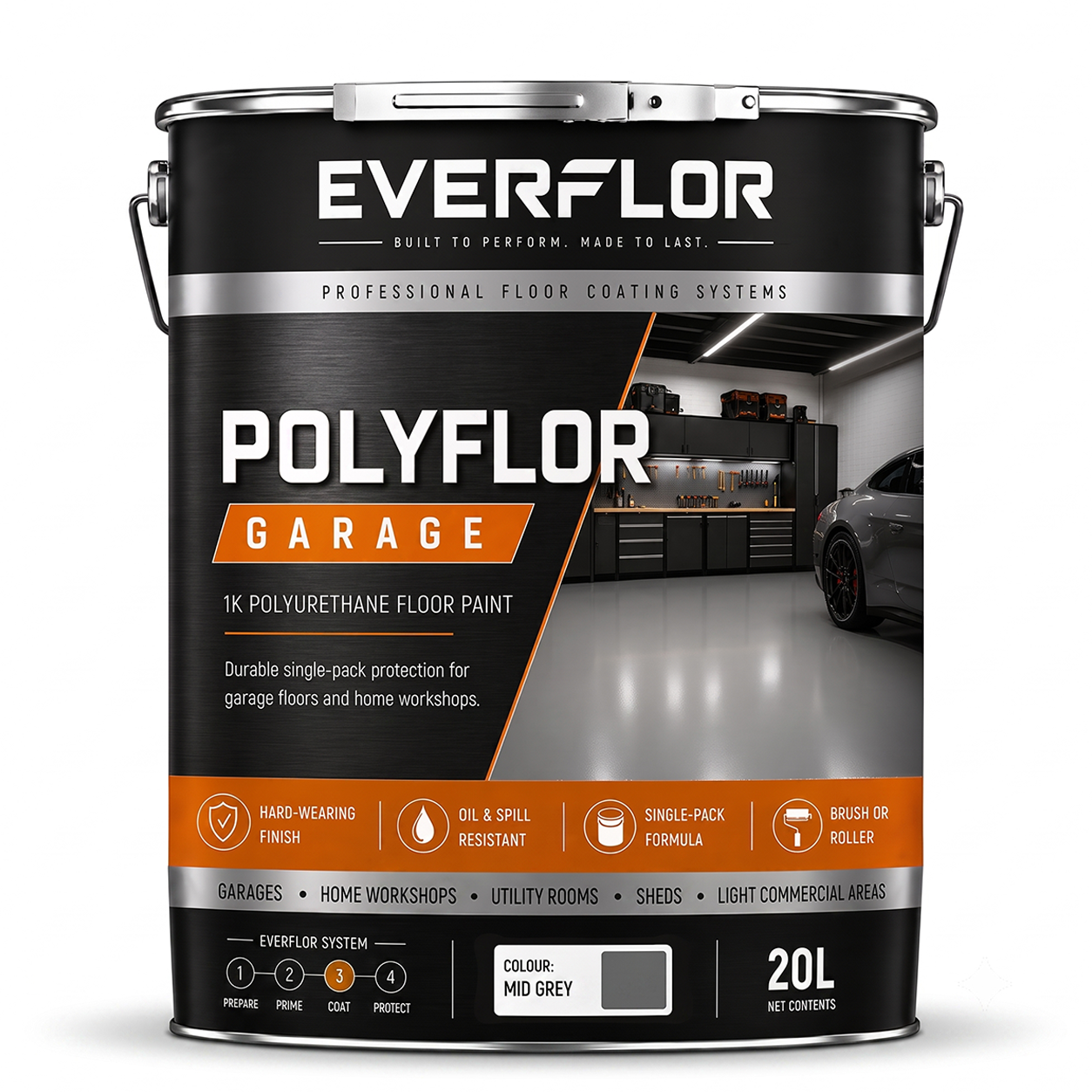
In garages, workshops, storage areas, and service corridors, single pack floor paints are commonly used to improve the appearance and durability of mineral floor surfaces. The coating forms a protective film that reduces dusting from concrete substrates, improves resistance to pedestrian traffic, and provides a more maintainable surface compared with untreated floors.
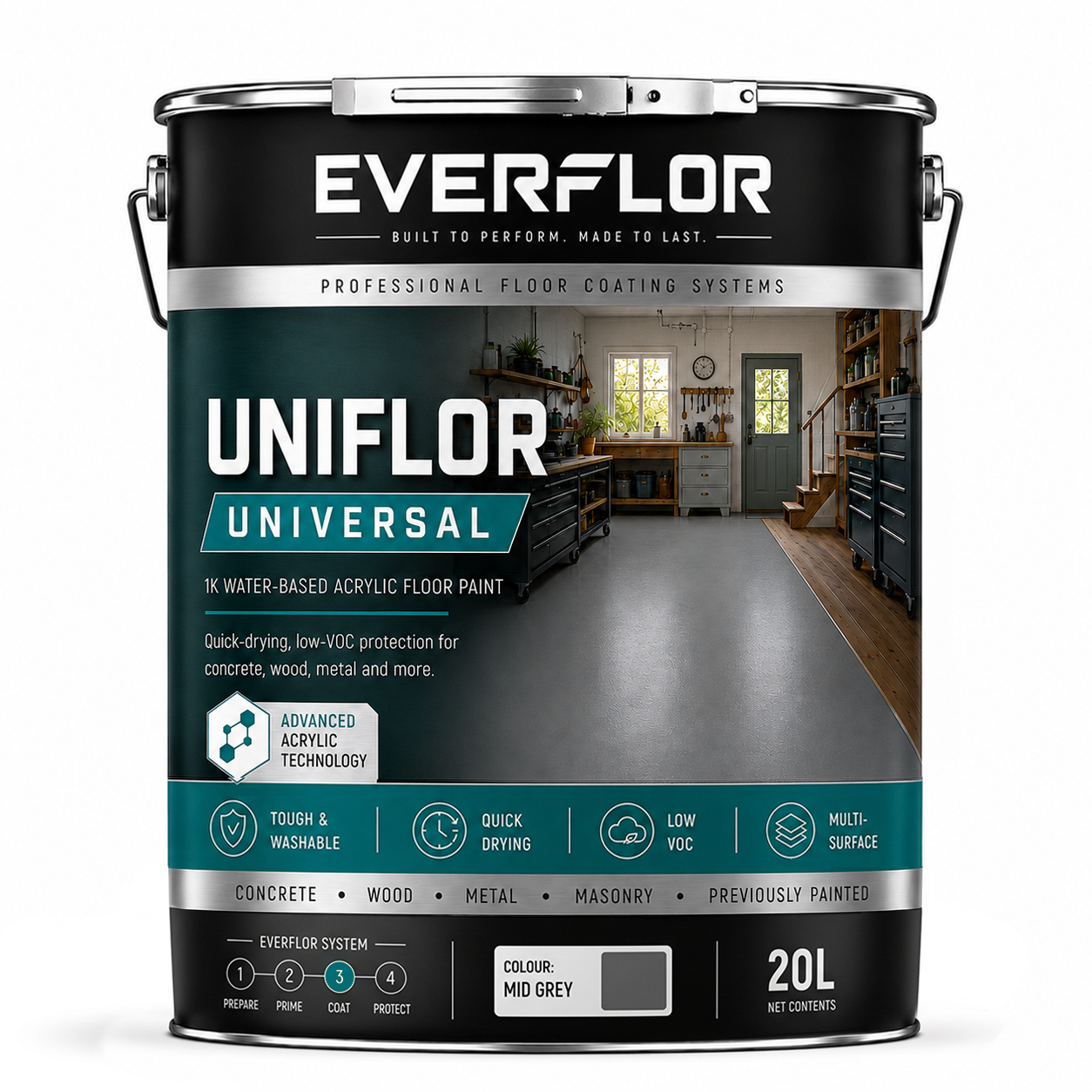
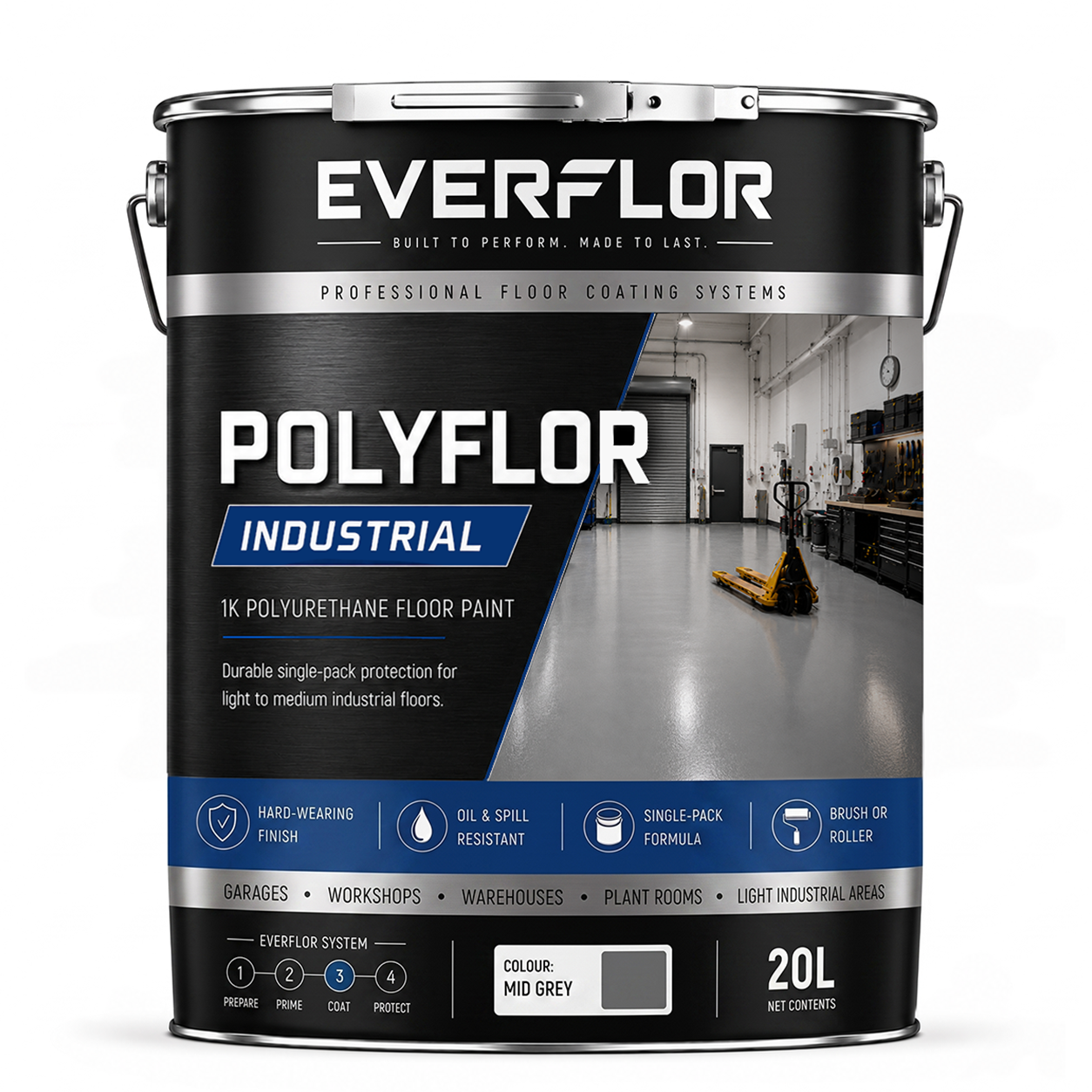
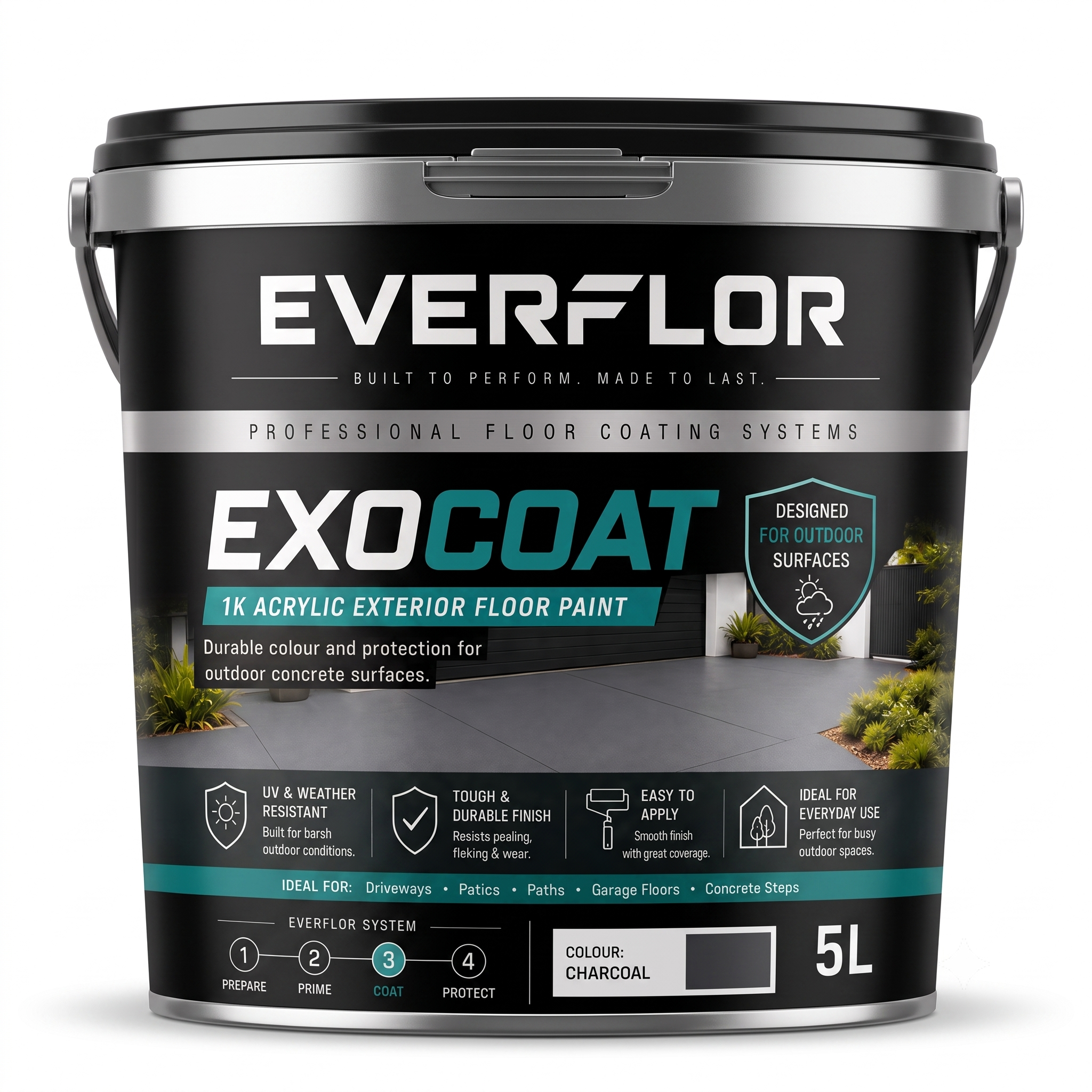
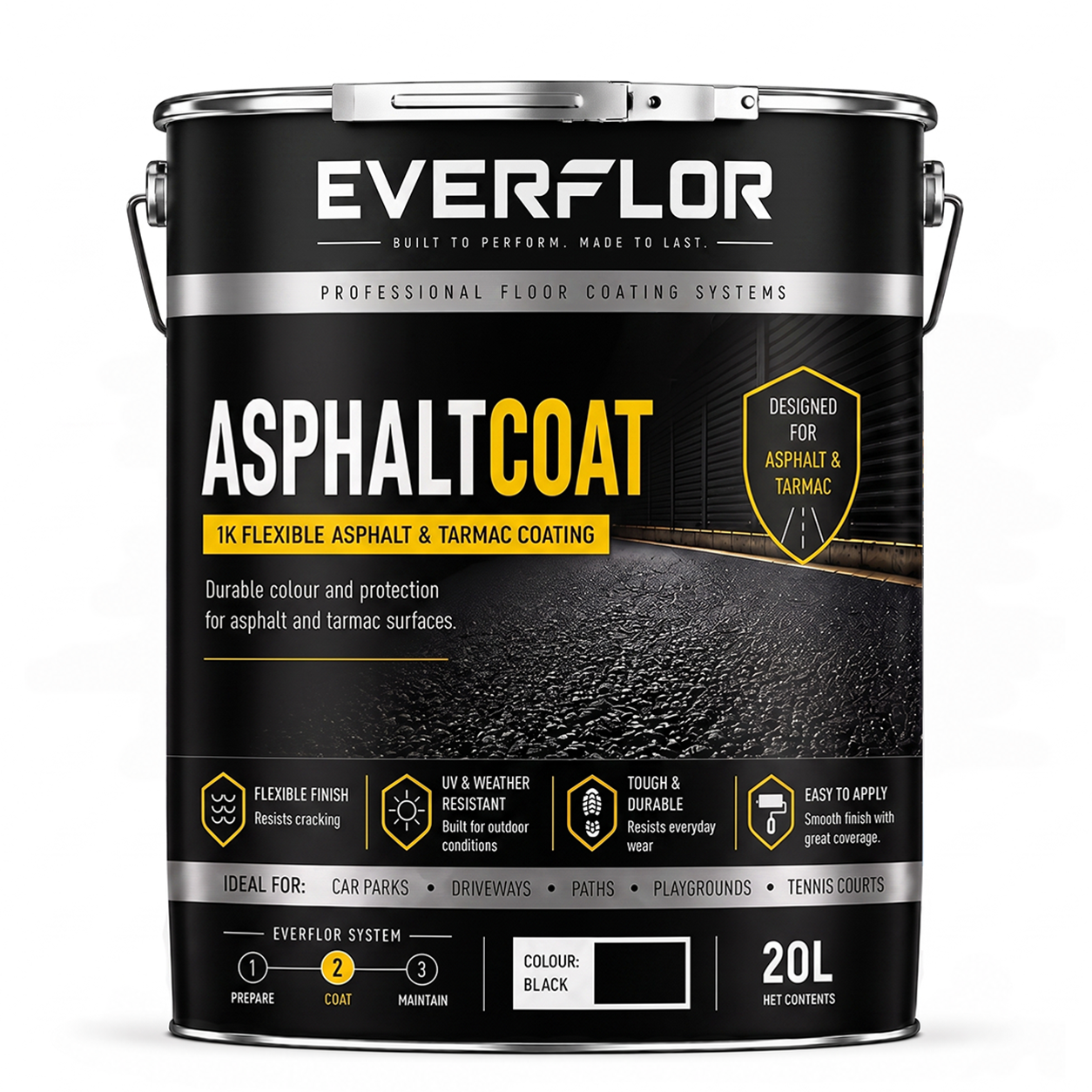
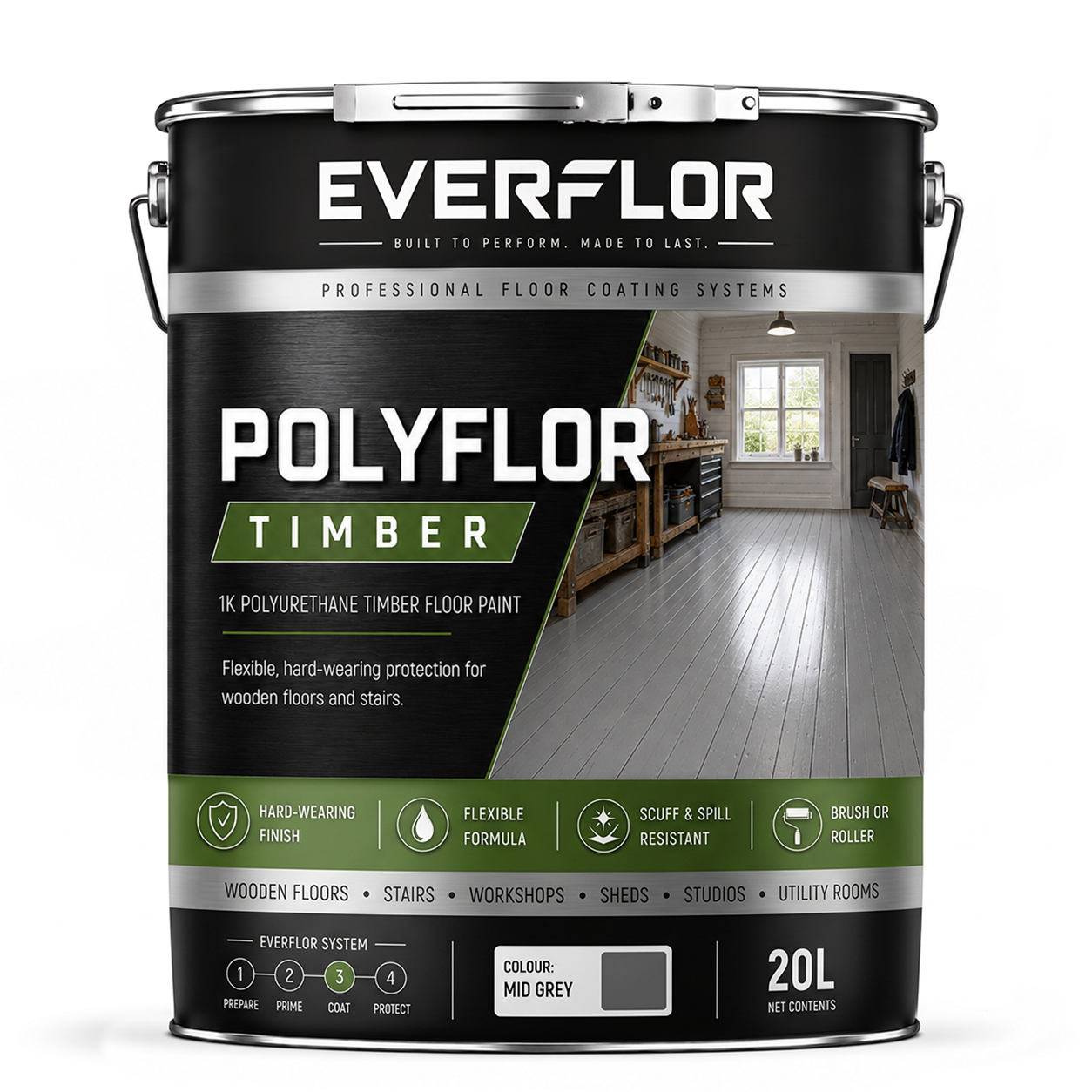
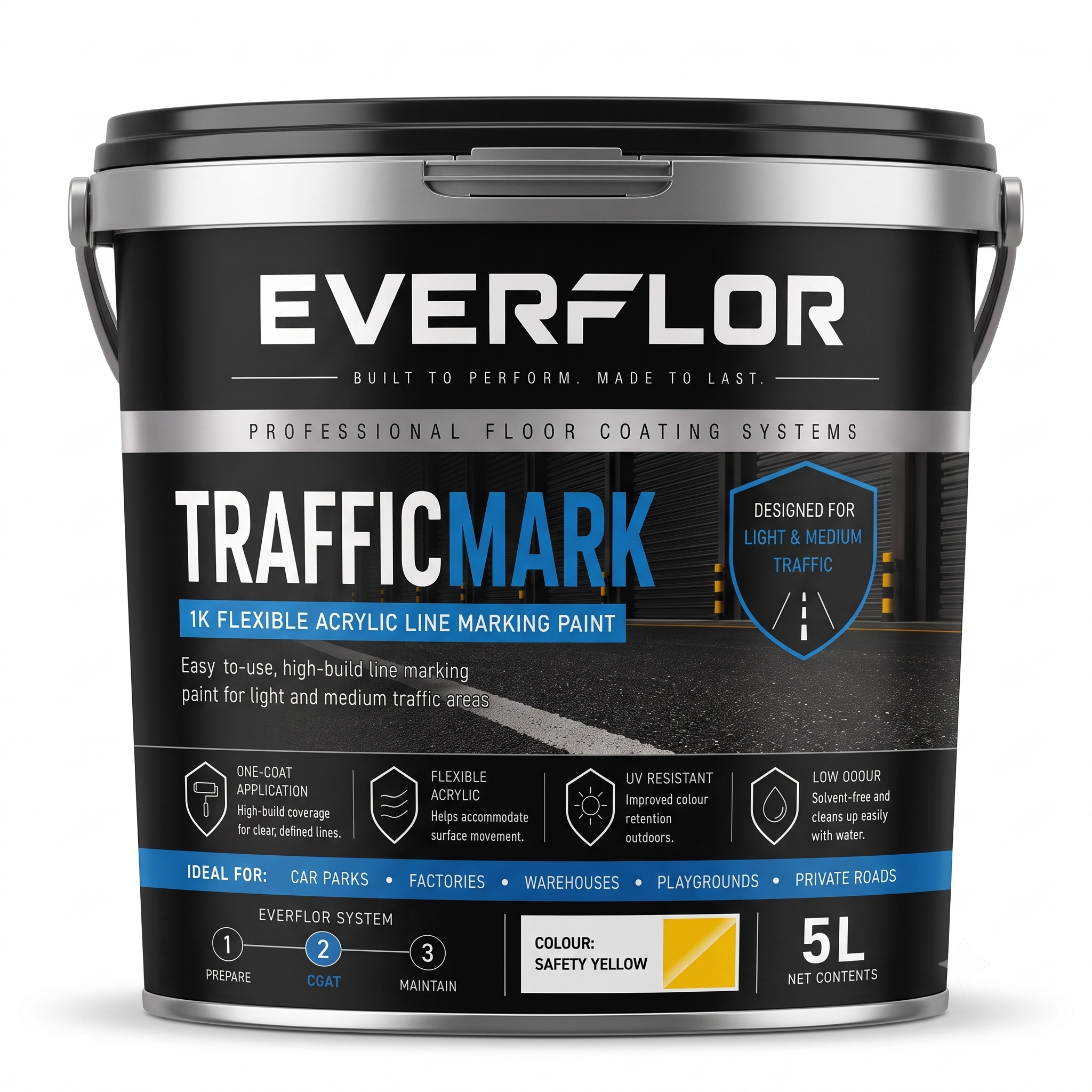
EVEREST Everflor single pack floor coatings utilise technologies such as polyurethane, water-based acrylic, and chlorinated rubber depending on the intended environment. These formulations allow the coating to bond with prepared concrete and asphalt surfaces while offering a convenient application process for refurbishment and maintenance projects.
Because these systems do not require component mixing, they are frequently selected where ease of application and predictable installation procedures are priorities.
Suitable Substrates & Surface Preparation
Concrete floors are the most common substrate for single pack floor paints. Proper surface preparation remains essential to ensure the coating adheres effectively and performs reliably over time.
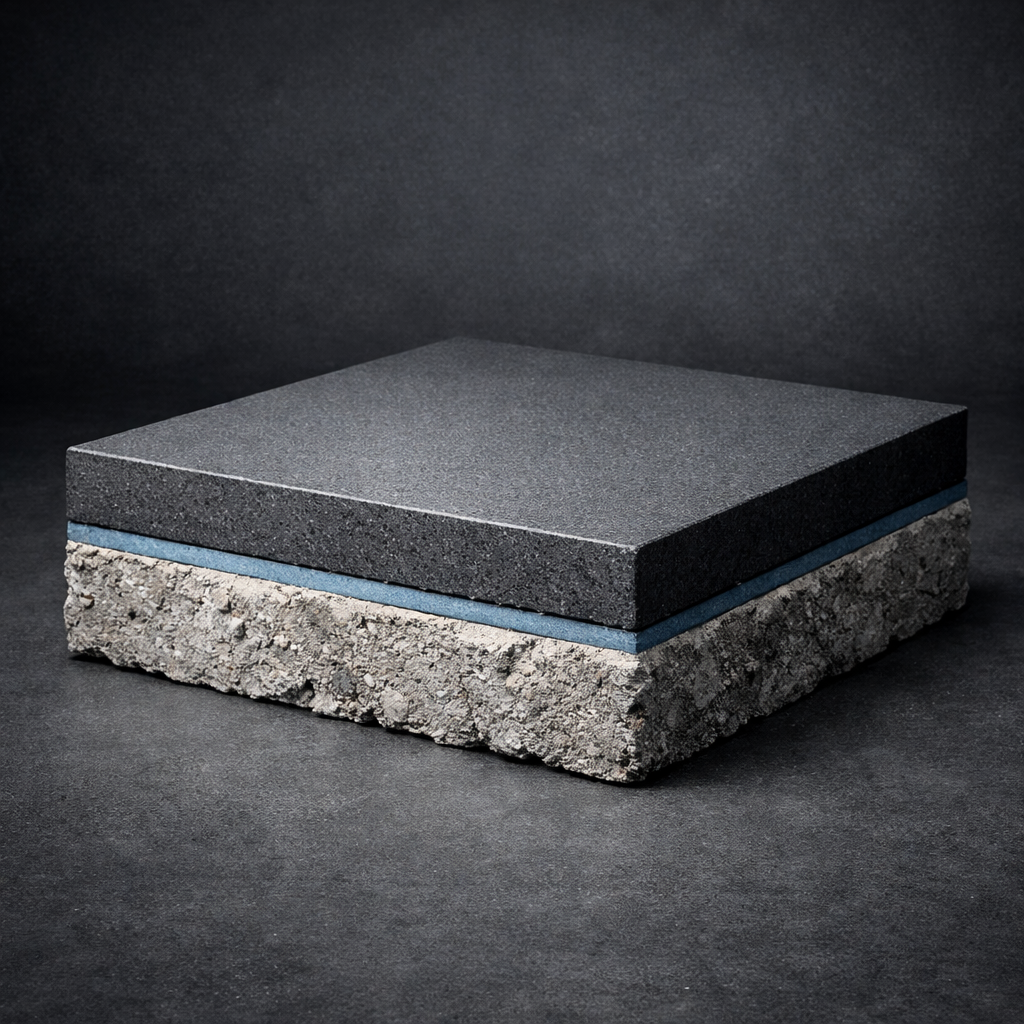
Concrete surfaces should be clean, dry, and free from oil, grease, dust, curing compounds, and other contaminants before coating. Mechanical preparation such as grinding or light abrasion may be necessary to remove weak surface layers and provide a suitable surface profile for adhesion.
Asphalt floors and bituminous substrates may also be coated with compatible single pack systems. The surface should be stable and free from loose aggregate or excessive surface oils before application.
Previously painted floors can often be recoated where the existing coating remains sound and well bonded. Loose or deteriorated coatings should be removed and the surface lightly abraded to promote intercoat adhesion.
Where substrates exhibit excessive porosity or dusting, the use of compatible floor primers may help regulate absorption and stabilise the surface prior to applying the coating.
Performance Characteristics & Limitations
Single pack floor paints provide a convenient and versatile coating option for floors requiring moderate protection. Once cured, the coating forms a film that improves resistance to abrasion from pedestrian traffic and light wheeled equipment.
Polyurethane-based single pack coatings often provide improved abrasion resistance and flexibility, which can help maintain coating integrity on substrates experiencing minor movement.
Acrylic floor paints are commonly used where ease of application and breathability are desirable, particularly on concrete floors that may retain minor moisture movement.
Chlorinated rubber coatings can provide practical durability and relatively quick drying characteristics, making them suitable for maintenance applications where floors need to return to service within a reasonable timeframe.
Despite these advantages, single pack coatings generally provide lower mechanical and chemical resistance compared with two-component resin systems. Their film thickness and crosslinking characteristics limit their suitability in environments exposed to continuous heavy vehicle traffic or aggressive chemical exposure.
Internal vs External Considerations
Single pack floor coatings can be used in both internal and external environments depending on the specific resin formulation.
Internal environments such as garages, workshops, storage rooms, and plant areas benefit from coatings that provide improved durability and surface cleanliness while remaining relatively simple to apply.
External surfaces such as walkways, car parks, and service areas may also be coated using suitable single pack systems where weather resistance and adhesion to mineral substrates are required.
Environmental exposure, substrate movement, and moisture conditions should be considered when selecting the appropriate formulation for exterior applications.
Selection Guidance & When to Specify Alternatives
Single pack floor coatings are typically specified where floors require practical refurbishment and moderate durability without the complexity of multi-component resin systems. They are commonly used in residential garages, storage areas, workshops, and light commercial spaces where pedestrian traffic or occasional vehicle use occurs.
These coatings are particularly useful for maintenance painting where existing floor coatings require renewal or where application simplicity is important.
However, where floors are exposed to heavy mechanical traffic, chemical contamination, or demanding industrial environments, two-pack resin flooring systems may provide greater durability. Epoxy or polyaspartic floor coatings can deliver improved abrasion resistance, chemical resistance, and longer service life under more demanding conditions.
Selecting the appropriate floor coating system should therefore consider traffic levels, environmental exposure, and the desired balance between application convenience and long-term performance.