System Overview
For concrete, asphalt, and previously painted floor surfaces, line marking coatings are used to create durable visual markings that organise traffic movement, identify safety zones, and define operational areas. These coatings provide high-visibility surface markings that adhere to prepared substrates while resisting wear from pedestrian movement and vehicle traffic.
Operational environments such as warehouses, car parks, loading bays, and industrial circulation areas rely on clear floor markings to support safe movement and efficient site organisation. Line marking paints create defined zones for pedestrian routes, vehicle lanes, storage areas, and hazard boundaries.
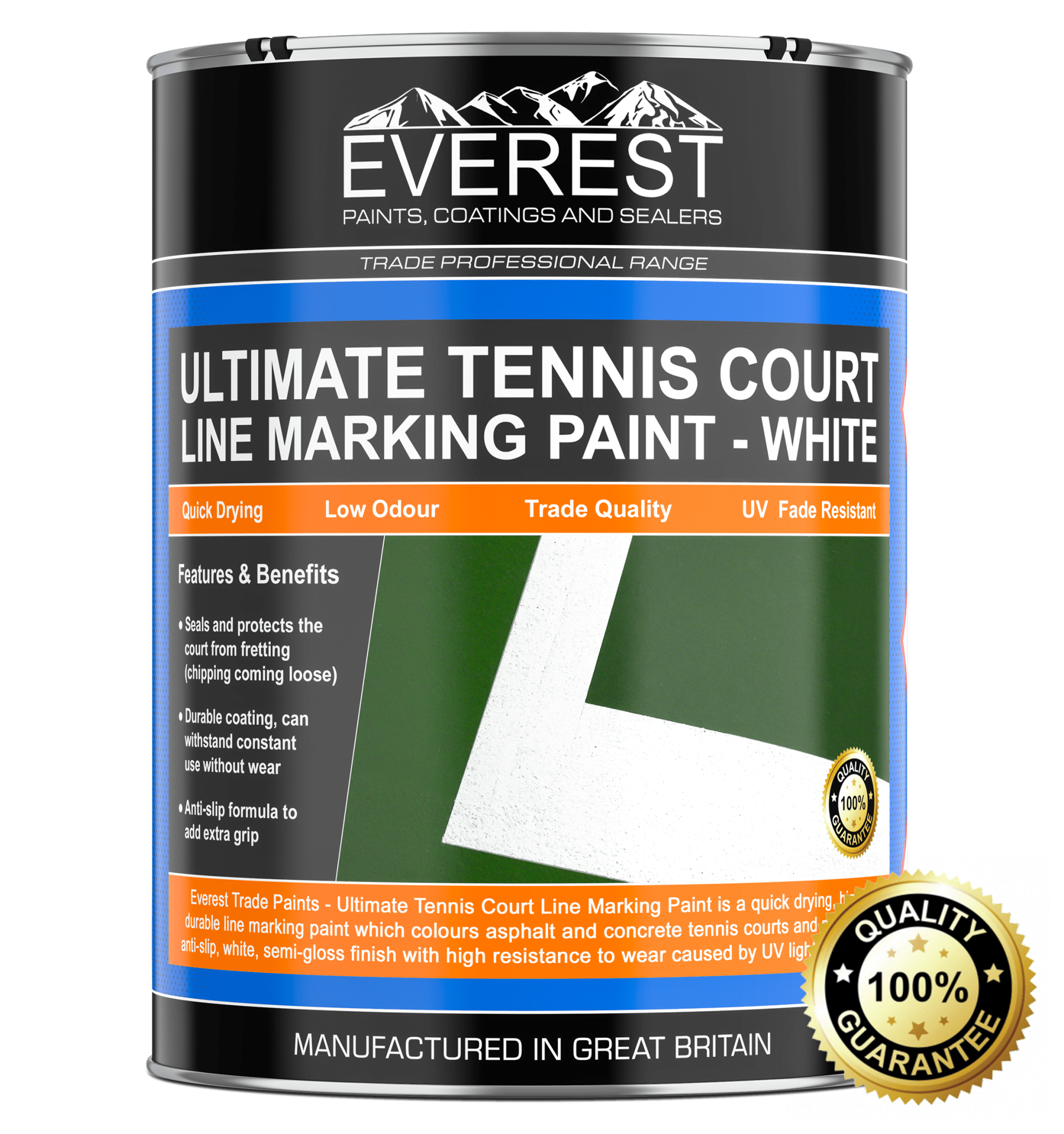
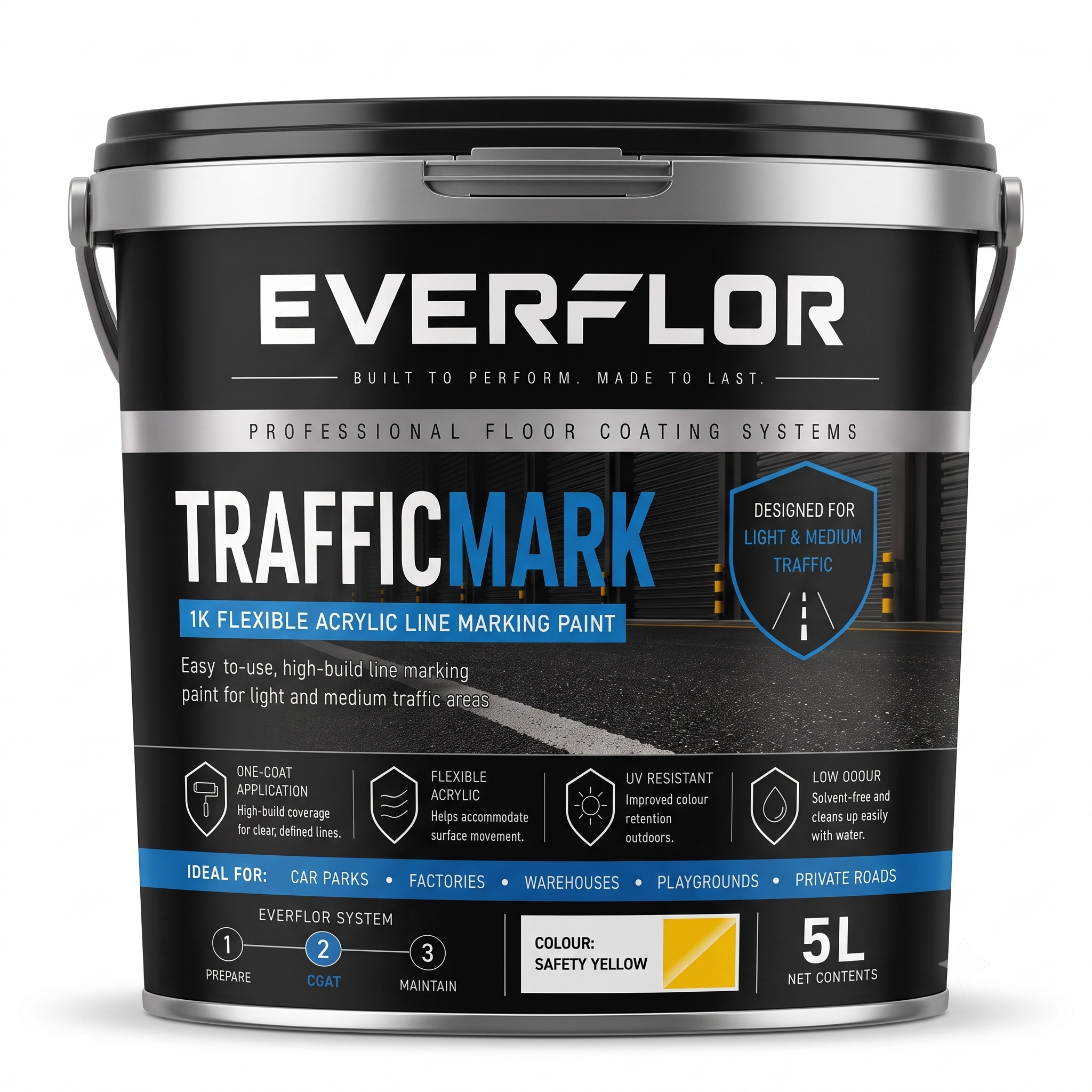
EVEREST Everflor line marking coatings utilise a range of technologies including epoxy, chlorinated rubber, and water-based acrylic systems. Each resin type offers different performance characteristics depending on the environment and traffic levels. Acrylic systems are often used where straightforward application and moderate durability are required, while epoxy and chlorinated rubber coatings provide improved resistance to abrasion and operational wear.
The appropriate line marking system should be selected according to substrate condition, traffic intensity, and environmental exposure.
Suitable Substrates & Surface Preparation
Concrete and asphalt are the most common substrates for line marking coatings. These surfaces require proper preparation to ensure reliable adhesion and long-term durability of the marking system.
Concrete floors should be clean, dry, and free from dust, oil, grease, and curing compounds before coating. Surface contaminants can interfere with adhesion and lead to premature wear of the markings. Mechanical preparation such as light grinding or abrasion may be required where the surface is smooth or contaminated.
Asphalt surfaces must be stable and free from loose aggregate or surface oils that may affect coating performance. Newly laid asphalt should be allowed to weather before coating to ensure the surface has stabilised.
Previously painted floors and existing markings can usually be recoated provided the existing coating remains well adhered. Loose or deteriorated markings should be removed, and the surface cleaned thoroughly before applying new markings.
Correct surface preparation is particularly important for line marking coatings because these systems are often applied as relatively thin films that depend on strong adhesion to the substrate.
Performance Characteristics & Limitations
Line marking paints are formulated to provide high visibility and maintain colour clarity under operational conditions. The coatings must resist abrasion from pedestrian traffic, tyres, and routine cleaning processes while retaining sharp visual definition.
Epoxy line marking systems provide strong adhesion and improved wear resistance on prepared concrete floors. These coatings are commonly used in warehouses and factories where markings must withstand regular vehicle and equipment traffic.
Chlorinated rubber coatings offer practical durability and relatively fast drying behaviour, making them suitable for both internal and external marking applications where operational downtime must be limited.
Water-based acrylic marking paints are typically used in lighter-duty environments or where ease of application and lower odour are desirable.
Despite their durability, standard line marking coatings are not designed to perform as full-surface protective floor systems. They are intended specifically for marking and delineation rather than structural surface protection.
Internal vs External Considerations
Line marking systems can be used in both internal and external environments depending on the selected coating technology.
Internal environments such as warehouses, factories, and distribution centres often involve forklift traffic, pallet movement, and routine cleaning operations. Coatings used in these areas must resist abrasion while maintaining colour visibility under artificial lighting.
External environments including car parks, service yards, and roadway areas introduce additional environmental factors such as UV exposure, rainfall, and temperature changes. Chlorinated rubber and acrylic coatings are often used outdoors due to their weather resistance and practical drying characteristics.
Surface condition may vary significantly between internal and external substrates, particularly with asphalt surfaces exposed to weathering and environmental contamination.
Selection Guidance & When to Specify Alternatives
Line marking paints are typically specified where operational safety, traffic control, and site organisation require clear visual guidance. These coatings provide an efficient method of defining circulation routes, hazard areas, and storage zones across commercial and industrial environments.
They are commonly used in car parks, warehouses, factories, distribution centres, and service yards where traffic flow must be clearly controlled.
However, in areas subjected to very high vehicle traffic or continuous operational wear, higher durability marking systems may be required. Epoxy-based or specialist heavy-duty marking coatings can provide improved abrasion resistance and longer service life in demanding environments.
Selecting the appropriate marking system should consider the substrate type, expected traffic levels, and required maintenance intervals to ensure the markings remain visible and functional over time.