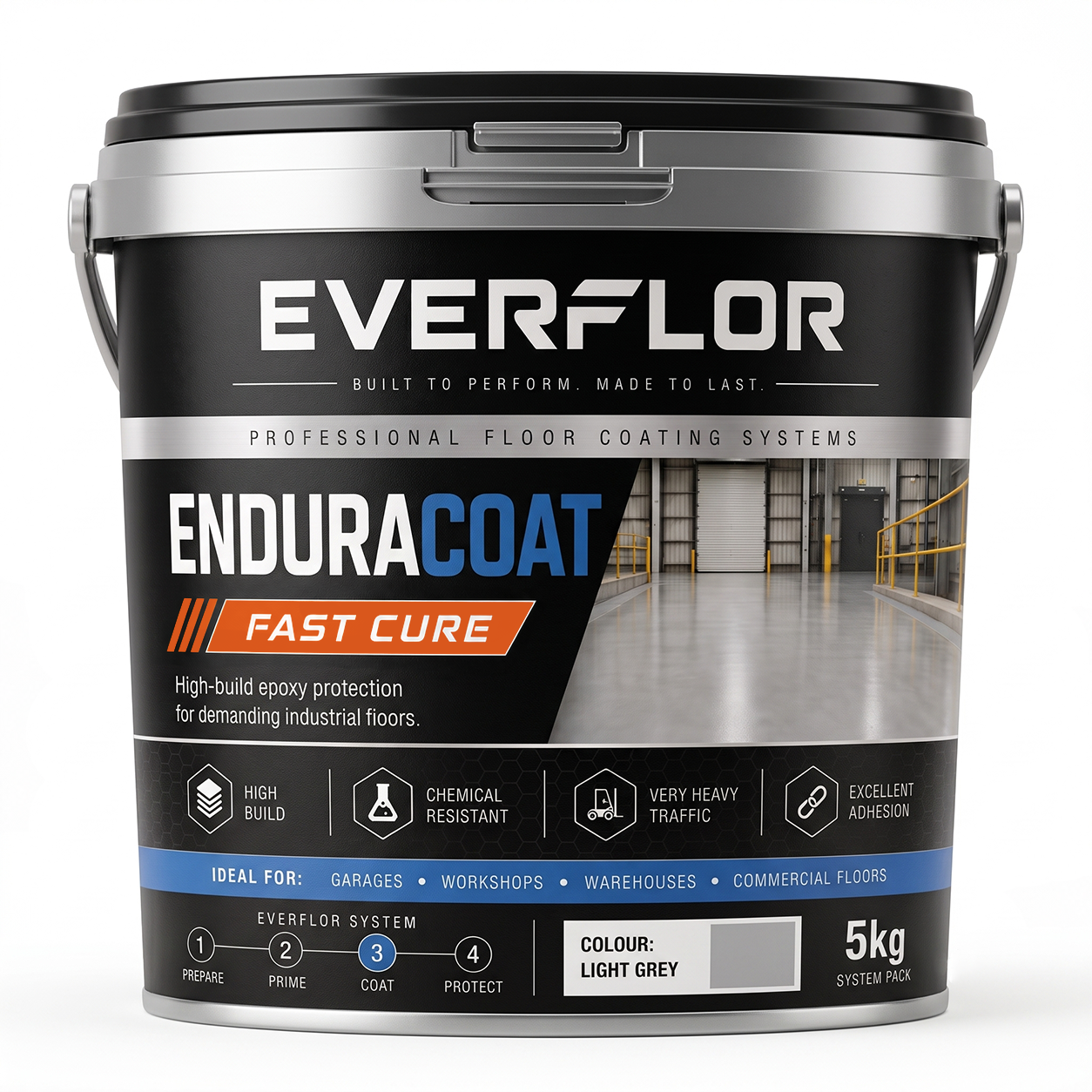
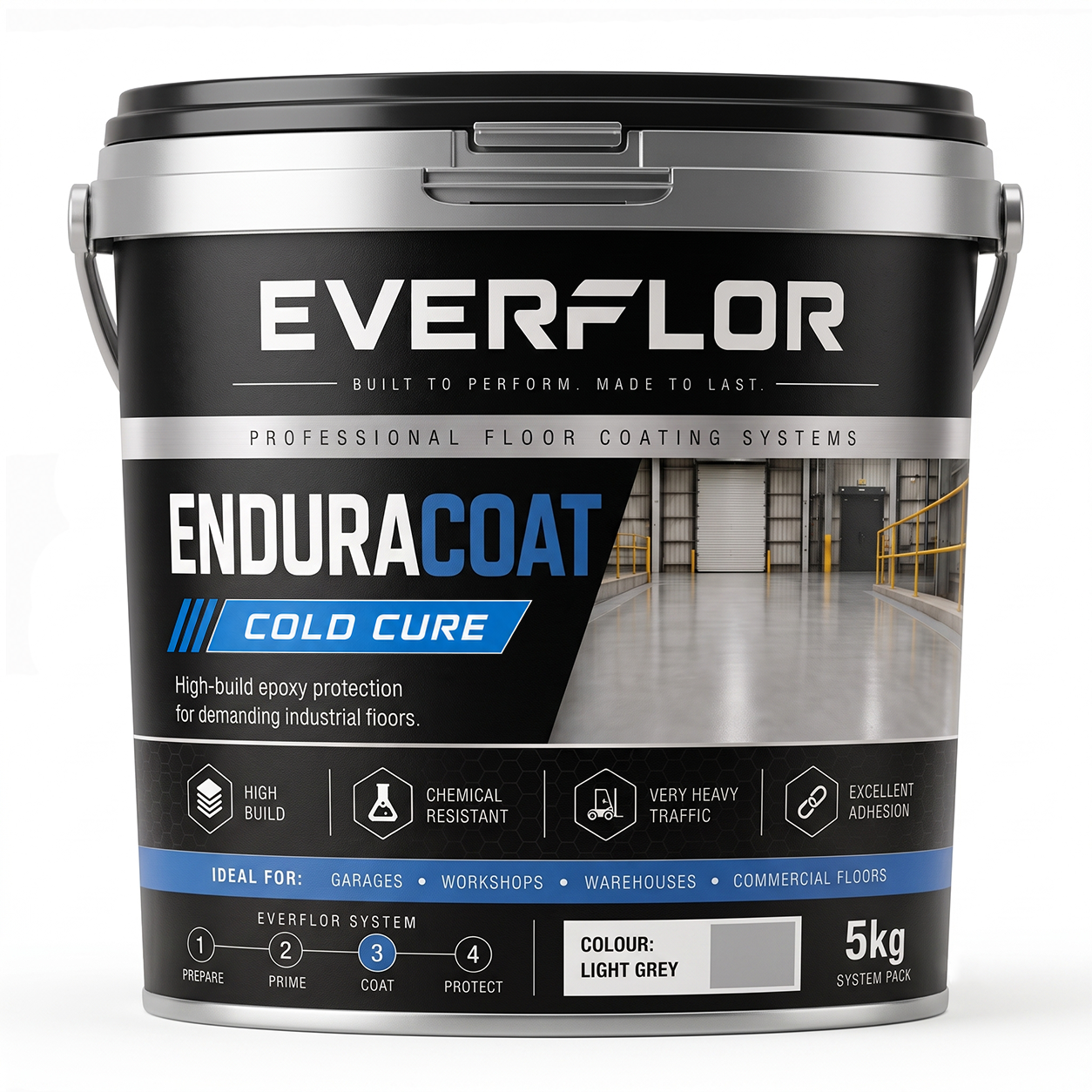
System Overview
For concrete and asphalt surfaces requiring clear traffic demarcation, marking systems must provide rapid drying characteristics and reliable adhesion under operational pressures. Fast drying line marking paints for concrete and asphalt are specified where return-to-service time is critical in car parks, warehouses and distribution environments.
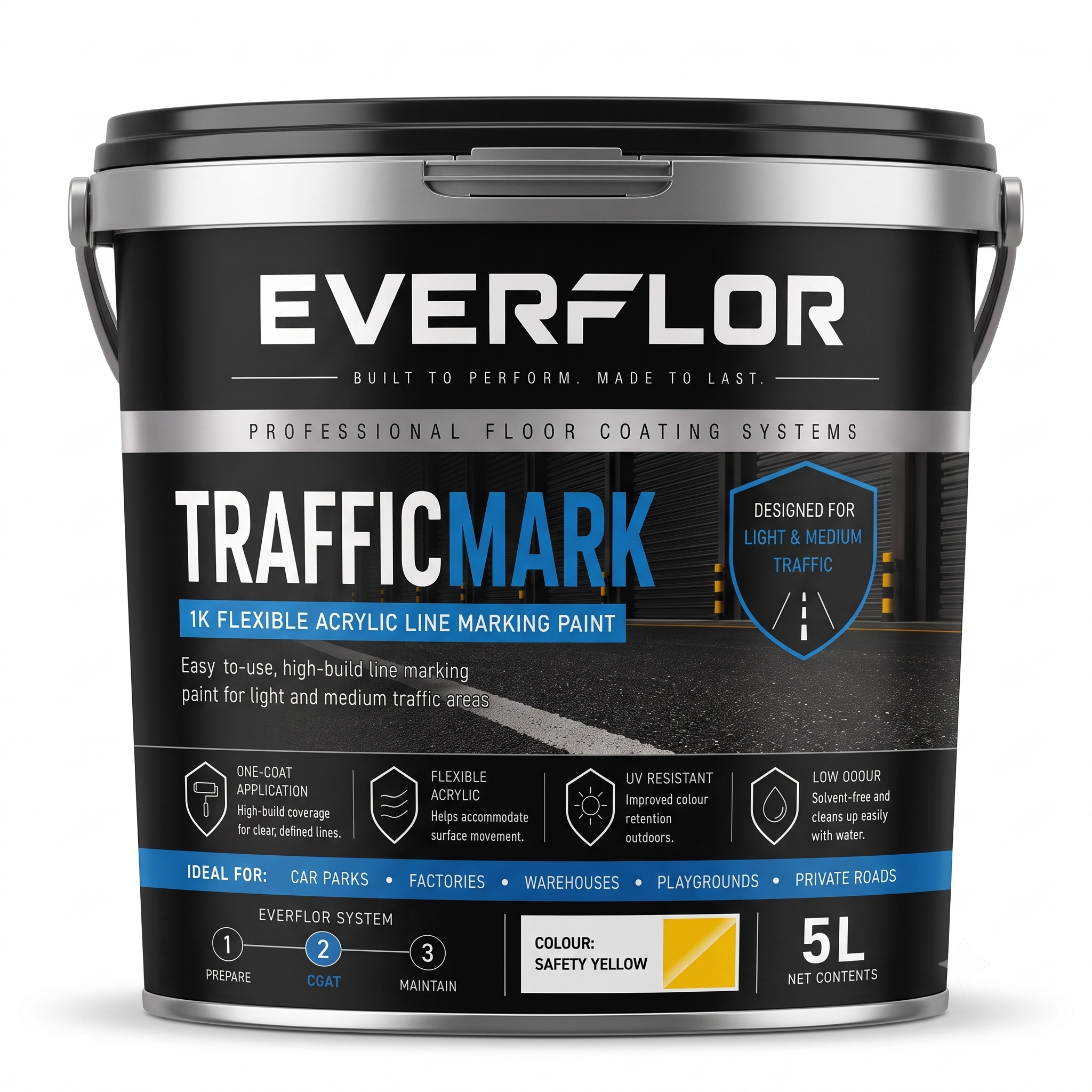
The EVEREST Everflor range in this collection includes chlorinated rubber and acrylic technologies formulated for quick surface drying and efficient application by spray or roller. These single pack systems are designed to support both new marking layouts and refurbishment of existing line work.
They are commonly used for bay markings, directional arrows, pedestrian walkways and safety zoning in commercial and light industrial settings where phased application is necessary.
Suitable Substrates & Surface Preparation
Concrete substrates must be clean, dry and free from dust, oil and curing residues before marking. Mechanical abrasion or thorough cleaning may be required to remove contamination and ensure reliable adhesion.
Asphalt surfaces should be stable and sufficiently weathered. Recently laid asphalt can contain surface oils that inhibit bonding and may require additional curing time before coating. Surface cleanliness is essential to prevent premature wear or delamination.
Existing line markings should be assessed prior to overcoating. Sound, well-adhered markings may be recoated following cleaning and light abrasion. Failing or incompatible materials should be removed to prevent reflective cracking or peeling.
Dry conditions are critical during application. Moisture on the substrate can significantly reduce adhesion and compromise durability.
Performance Characteristics & Limitations
Chlorinated rubber marking paints offer rapid drying times and good adhesion to both concrete and asphalt. They are particularly suited to projects where sections must be reopened quickly to vehicle or pedestrian traffic. UV stability supports long-term colour visibility in exposed environments.
Acrylic marking paints provide strong colour retention and ease of application, with suitability for both internal and external use. They offer practical abrasion resistance under light to moderate trafficking.
As single pack systems, these coatings provide efficient installation and maintenance flexibility. However, longevity under constant heavy trafficking or repeated turning forces is lower than that of two pack marking systems. In high stress zones such as loading bays or tight turning areas, wear rates may increase.
These systems are not intended for severe industrial chemical exposure. Performance is dependent on correct film thickness and substrate preparation.
Internal vs External Considerations
Externally, UV exposure and rainfall influence performance. Acrylic and chlorinated rubber systems in this collection are formulated for colour stability under sunlight and suitable weather resistance for roadways and car parks.
Internally, such as in warehouses and factories, rapid drying characteristics support operational continuity. Ventilation should be considered during application, particularly in enclosed areas.
Surface profile affects durability in both environments. Smooth substrates may require controlled application thickness to ensure consistent opacity and wear resistance.
Selection Guidance & When to Specify Alternatives
Fast drying marking paints within this collection are suited to light to heavy duty environments where speed of installation and return to service are key priorities.
For general car park bays, pedestrian routes and warehouse zoning, acrylic or chlorinated rubber systems provide practical and efficient solutions.
In areas subject to constant heavy vehicle turning, high traffic density or extended service life requirements, upgrading to heavy duty or two pack marking systems is recommended to improve abrasion resistance and longevity.
System selection should consider traffic intensity, substrate condition and programme constraints, ensuring that rapid cure benefits are balanced with realistic durability expectations.