System Overview
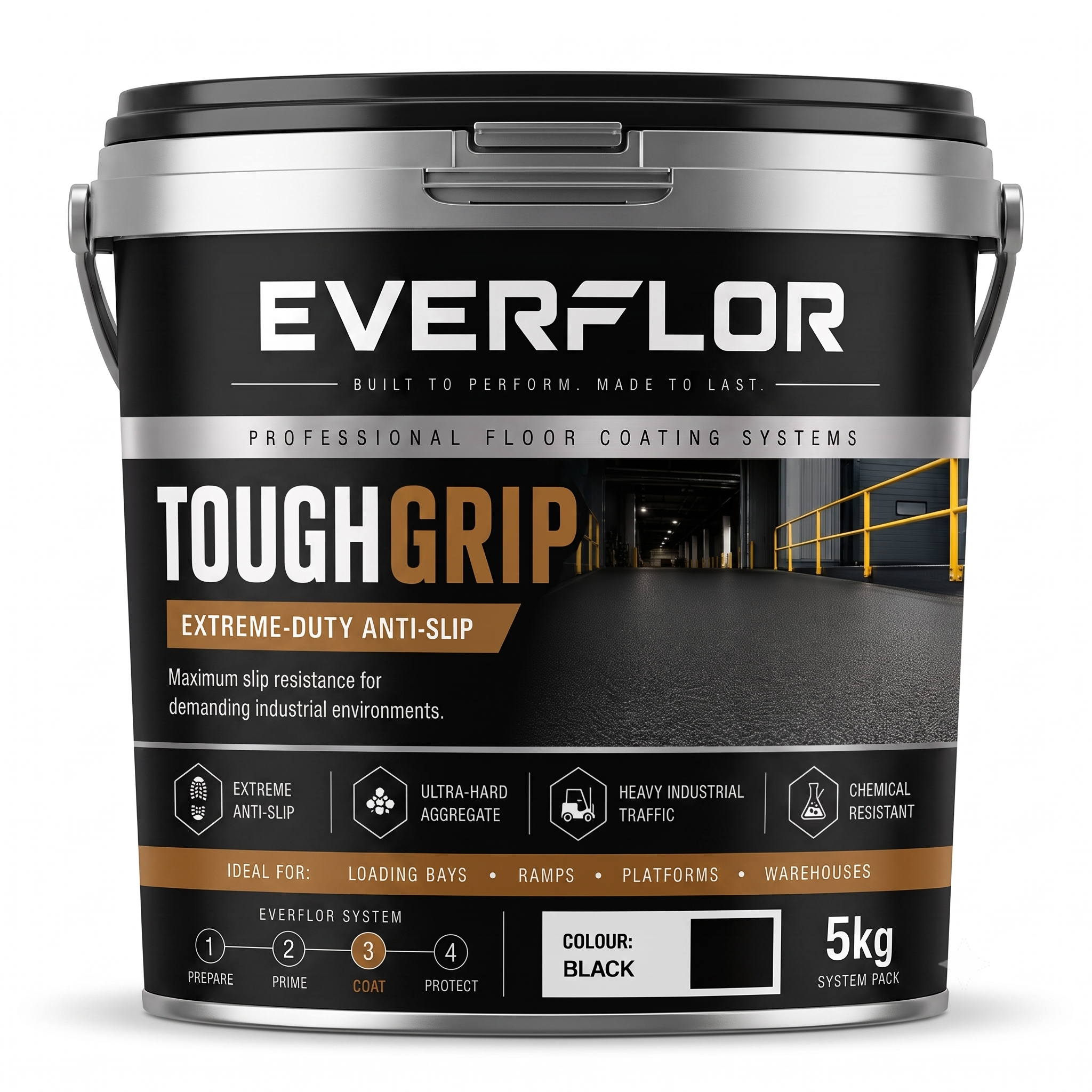
For concrete and asphalt steps, ramps, and pedestrian walkways, safety floor coatings are used to create visible, slip-resistant surfaces that reduce accident risk in high footfall areas. These coatings form a durable protective layer on prepared substrates while allowing the incorporation of anti-slip aggregates that improve traction under both dry and wet conditions.
Pedestrian hazard zones such as stair treads, access ramps, warehouse walkways, and loading bay approaches are particularly susceptible to slips where surfaces become smooth, worn, or contaminated. Safety coatings are designed to highlight these areas visually while improving surface grip through textured finishes.
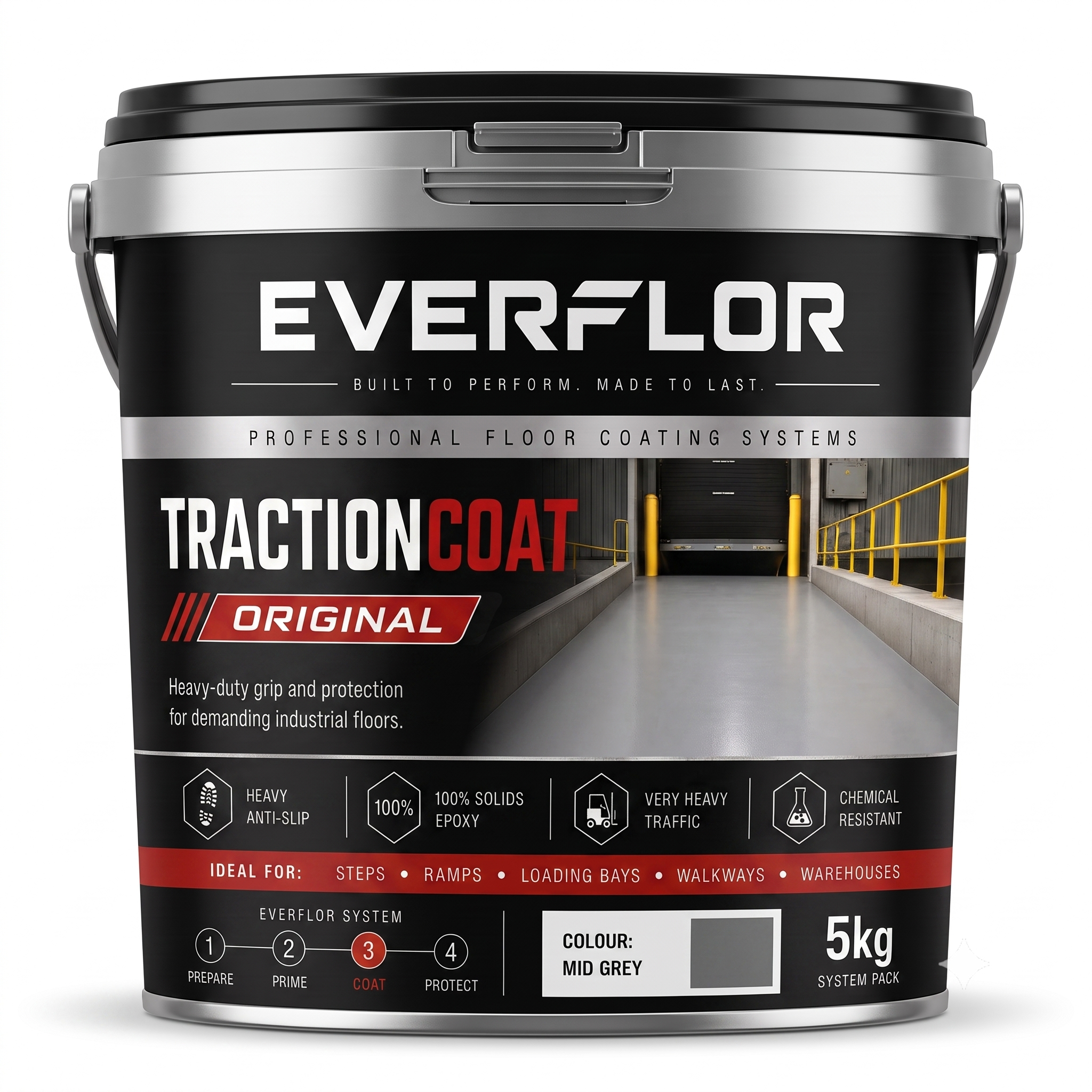
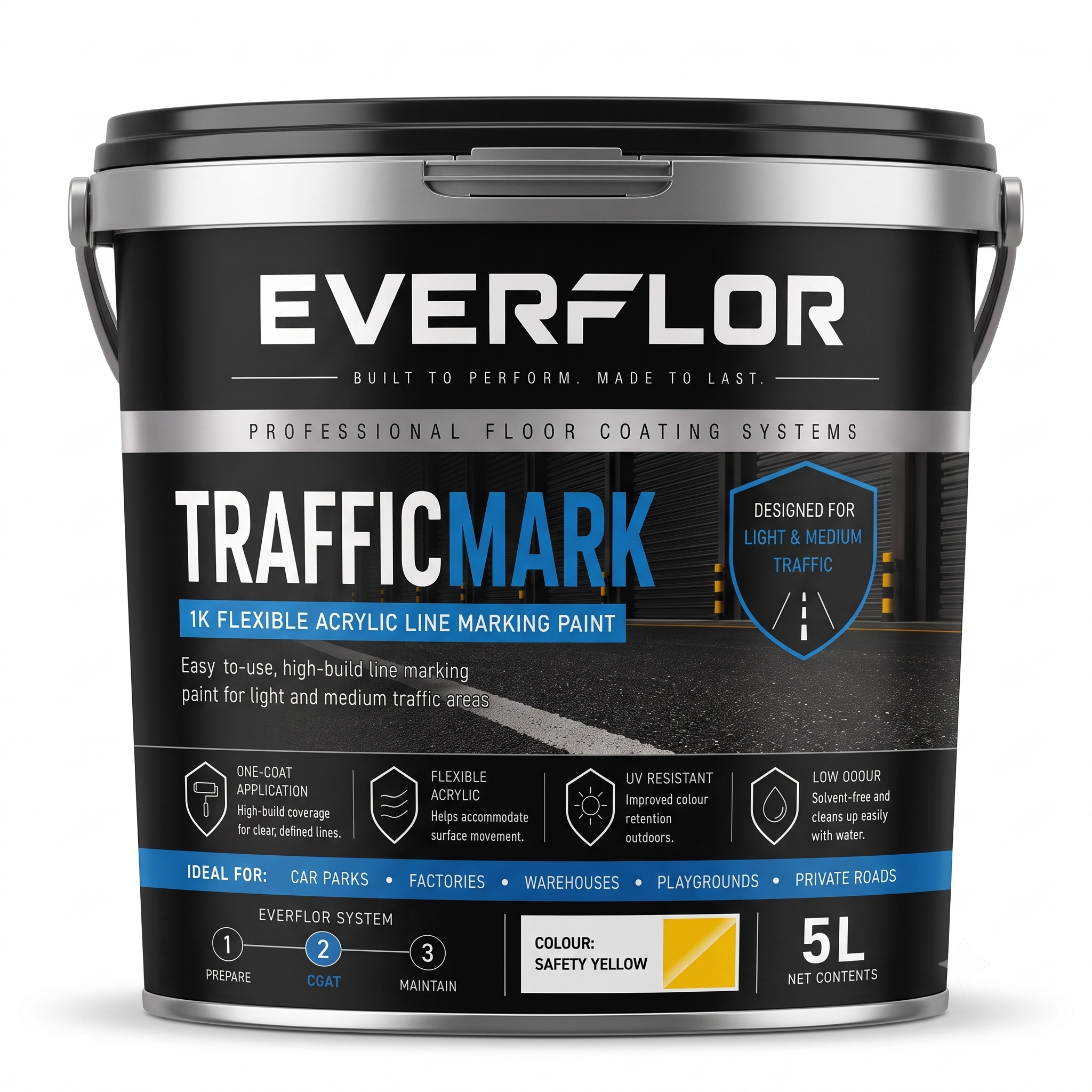
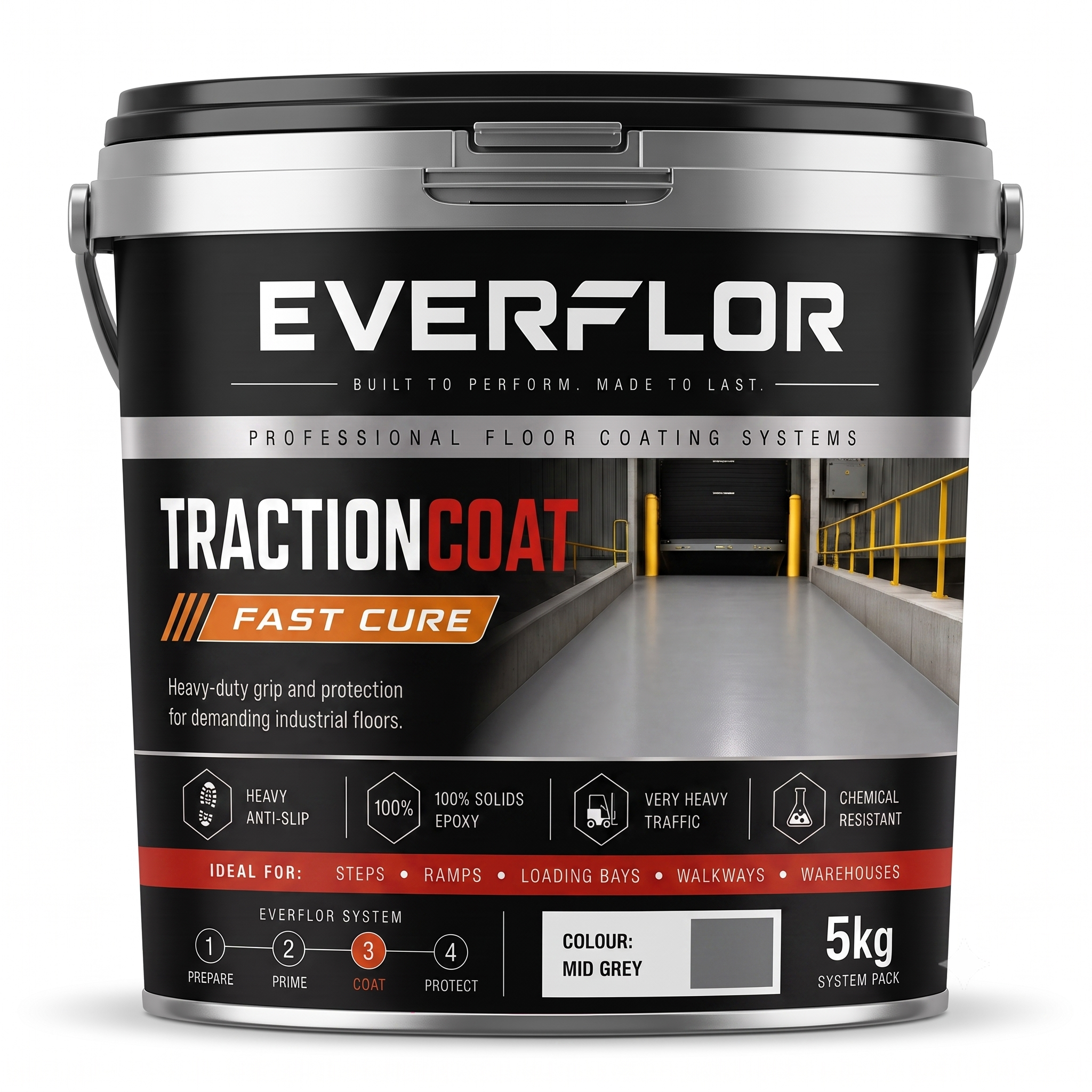
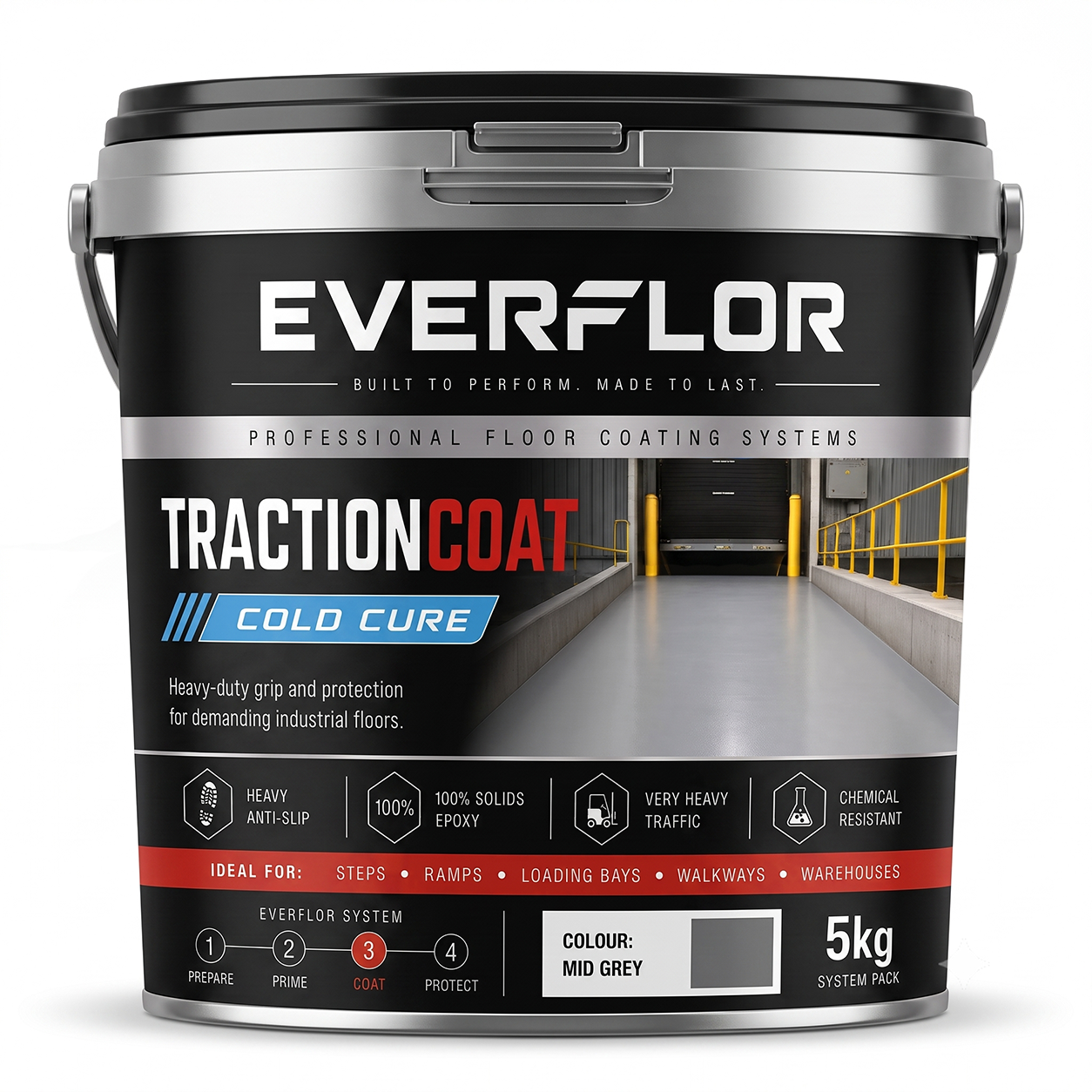
EVEREST Everflor safety coatings for steps and walkways utilise epoxy, polyurethane, and acrylic technologies depending on the required durability and environment. These systems can be combined with anti-slip aggregates to produce textured finishes that maintain traction while resisting abrasion from frequent pedestrian traffic.
Such coatings are commonly used to improve safety and visibility across industrial, commercial, and public access areas.
Suitable Substrates & Surface Preparation
Concrete and asphalt are the primary substrates for safety coatings applied to steps, ramps, and walkways. Proper preparation is necessary to ensure strong adhesion and reliable slip-resistant performance.
Concrete surfaces should be clean, dry, and free from dust, oils, grease, and other contaminants before coating. Mechanical cleaning, pressure washing, or degreasing may be required depending on the condition of the substrate. Smooth concrete may benefit from light abrasion to improve coating adhesion.
Asphalt surfaces should be stable and free from loose aggregate or surface oils prior to coating application. Newly laid asphalt may require a curing period before coatings are applied.
Where surfaces have previously been painted or coated, the existing coating should be inspected for adhesion. Sound coatings can often be overcoated following cleaning and light abrasion, while deteriorated coatings should be removed.
Slip resistance is achieved through the incorporation of anti-slip aggregates or textured additives during application, so correct preparation ensures these materials bond effectively with the coating film.
Performance Characteristics & Limitations
Safety coatings for pedestrian areas are designed to provide both visibility and traction on surfaces where slip hazards may occur. The coating film must maintain durability while supporting embedded anti-slip aggregates that create a textured walking surface.
Epoxy coatings provide strong adhesion and good abrasion resistance on prepared concrete surfaces, making them suitable for areas experiencing consistent foot traffic.
Polyurethane systems can offer improved flexibility and wear resistance, particularly where surfaces experience repeated movement or mechanical contact.
Acrylic coatings may be used where simpler application and moderate durability are sufficient, particularly for pedestrian areas that require visual marking and occasional resurfacing.
The level of slip resistance depends largely on the type and quantity of aggregate incorporated into the coating system. Without appropriate aggregate selection and application technique, the surface may not achieve the required traction performance.
Internal vs External Considerations
Safety coatings for steps and walkways can be used in both interior and exterior environments depending on the selected resin system.
Interior environments such as warehouse walkways, service corridors, and plant areas require coatings capable of withstanding repeated foot traffic and routine cleaning. Epoxy and polyurethane systems are commonly used in these situations for improved durability.
Exterior pedestrian areas such as access ramps, outdoor stairways, and car park walkways require coatings that maintain adhesion and slip resistance under weather exposure. Acrylic and polyurethane systems are often selected where resistance to moisture and UV exposure is important.
Environmental conditions such as rain, temperature variation, and contamination should be considered when specifying coatings for exterior pedestrian areas.
Selection Guidance & When to Specify Alternatives
Safety coatings for steps, ramps, and walkways are typically specified where pedestrian hazard zones require improved traction and visual identification. These coatings help define safe movement routes while reducing the risk of slips in areas exposed to regular foot traffic.
They are commonly used in warehouses, car parks, loading areas, public walkways, and building access routes where surface safety is a priority.
However, in environments subject to very heavy footfall, wheeled equipment, or continuous abrasion, higher-build resin flooring systems with integrated anti-slip aggregates may provide improved long-term durability.
Selecting the appropriate system should consider traffic intensity, environmental exposure, and the required level of slip resistance to ensure the coating performs reliably in pedestrian safety applications.